
Kartchner Caverns State Park
AtoZ Places Bucket Location


Abandoned & Ghost Towns

Ancient Ruins

Caves

Desert

Forest

Historical

Hot Springs

Lakes & Rivers

National & State Parks

Peaks






Kartchner Caverns State Park near Benson, Arizona protects one of the most remarkable living cave systems in the world — 2.4 miles of passages discovered in 1974 and kept secret for 14 years to ensure its preservation, featuring Kubla Khan the tallest column in Arizona at 58 feet, a 21-foot soda straw stalactite, and a cave environment maintained at 68°F and 99% humidity year-round through a system of airlocks and misting chambers.
National & State Parks
Caves

Exploring

Camping

Hiking
Café on site

Camping: Developed campsites available by reservation; fees required.
Dark Sky Park designation — excellent stargazing

FEE: Required

Fire Restrictions: Check before building any campfire
Pets not permitted — leashed dogs allowed in parking areas and paved roads only
Visitor Center / Gift Shop
Water: Available at this site.
More Info
Plants Foraged
Nearby Locations
Colossal Cave Mountain Park

Kartchner Caverns State Park
In November 1974 two young cavers — Gary Tenen and Randy Tufts — were exploring the limestone hills at the base of the Whetstone Mountains near Benson, Arizona, specifically looking for undiscovered caves. In the bottom of a sinkhole they found a narrow crack in the hillside. They squeezed through it and found themselves in a living cave of extraordinary size and beauty — stalactites, stalagmites, columns, soda straws, and formations of every shape and color covering the walls and ceiling of two rooms the size of football fields.
They told no one for four years.
In 1978 they told the landowners — James and Lois Kartchner — who agreed to protect the cave rather than exploit it. A decade of quiet negotiation with Arizona State Parks followed before the cave was publicly revealed in 1988 and the land sold to the state. The park opened November 12, 1999 — 25 years after discovery, after one of the most careful and deliberate cave preservation projects in American history. Today it is considered one of the best-preserved publicly accessible caves in the world.
We have visited twice — July 22, 2003 with Alexis and my sister Natasha when Alexis was eighteen months old, and March 26–27, 2011 when we camped overnight with Glen, Alexis, Luca, and two friends.
The Secret That Protected the Cave
The reason Kartchner Caverns is in the condition it is comes down to those four years of silence. Tenen and Tufts understood that announcing the discovery immediately would have brought curiosity seekers who would have damaged or destroyed formations that had been growing for tens of thousands of years. By working quietly with the landowners and eventually the state to put protections in place before any public access, they preserved a geological treasure that most cave discoverers would have been unable or unwilling to protect. Their care is why you can walk through it today.
The Cave — What You Walk Through
Kartchner Caverns maintains a constant interior temperature of 68°F and humidity of 99% year-round — the warm, moist environment that keeps the cave alive and the formations actively growing. Visitors pass through airlocks and misting systems before entering — a genuinely unusual entry process that underscores the seriousness of the preservation effort. No photography is permitted inside the cave. No cell phones, bags, or personal items are allowed in. The restrictions exist for good reason — human presence already stresses the environment, and anything that introduces contaminants accelerates that damage.
What you find inside justifies every precaution.
Two main galleries the size of football fields with 100-foot ceilings. A kaleidoscope of color — multi-hued stalactites dripping from above, stalagmites rising from the floor, giant white columns where the two have met and fused. Dainty white helictites extending sideways from the walls in defiance of gravity. Translucent orange carbonate formations. Shields of white calcite. The cave reads like a color inventory of the minerals in the limestone that surrounds it.
Kubla Khan — the tallest column formation known in Arizona, standing 58 feet from floor to ceiling. The name comes from the Coleridge poem — the cave's discoverers were readers as well as cavers. Standing next to it and looking up recalibrates the scale of what geological time produces.
The Soda Straw — a hollow stalactite 21 feet 2 inches long hanging from the ceiling. Soda straws form when water drips through a tube of calcite so slowly and steadily that the calcite deposits in a perfect cylinder rather than accumulating unevenly. This one is one of the longest known. It is extraordinarily thin and extraordinarily fragile — a single touch would break it. The fact that it has survived intact while the cave has had public visitors since 1999 is a testament to the management of the tours.
A 45,000-Year-Old Bat Guano Deposit — visible on the Rotunda/Throne Tour. Myotis bats have roosted in the cave for tens of thousands of years. The deposit is an archaeological record of their presence across millennia.
The Two Tours
Rotunda/Throne Tour — available year-round. Half a mile, approximately 90 minutes with 50 minutes underground. Covers the Rotunda and Throne Rooms — the original discovery route. Features Kubla Khan, the soda straw, and the bat guano deposit. Focuses on how the cave and formations were created.
Big Room Tour — available October through April only when the bat colony is not in residence. Half a mile, approximately 105 minutes with 50 minutes underground. Reveals the colorful and complex formations of the Big Room — the larger of the two main galleries. Features the most dramatic array of speleothems in the cave. Focuses on cave discovery, living and ancient fauna, and the park's conservation story.
Both tours are wheelchair accessible. Reservations are strongly recommended — tours sell out, particularly on weekends and holidays. Book at azstateparks.com well in advance.
Our Visits
July 22, 2003 — Alexis and Natasha
Natasha and I brought Alexis — eighteen months old at the time — to Kartchner Caverns. One of the earliest family visits on the bucket list and one of the more ambitious with a toddler. The cave's controlled temperature makes it comfortable year-round regardless of the desert heat outside — July inside Kartchner is 68°F, which is a genuine relief from what July looks like above ground in southern Arizona.
March 26–27, 2011 — Camping Visit
We camped overnight with Glen, Alexis, Luca, and two friends — using the park campground as a base for a full Kartchner experience. Two nights in the Whetstone Mountains with the cave tour as the centerpiece.
No photography is permitted inside the cave — our photos from this visit are of the sign and the campground. If you visit Kartchner, leave the camera in the car before the tour. No photograph could do the formations justice anyway — the experience is entirely three-dimensional and spatial in a way that a flat image cannot capture.
Above Ground — Trails and Camping
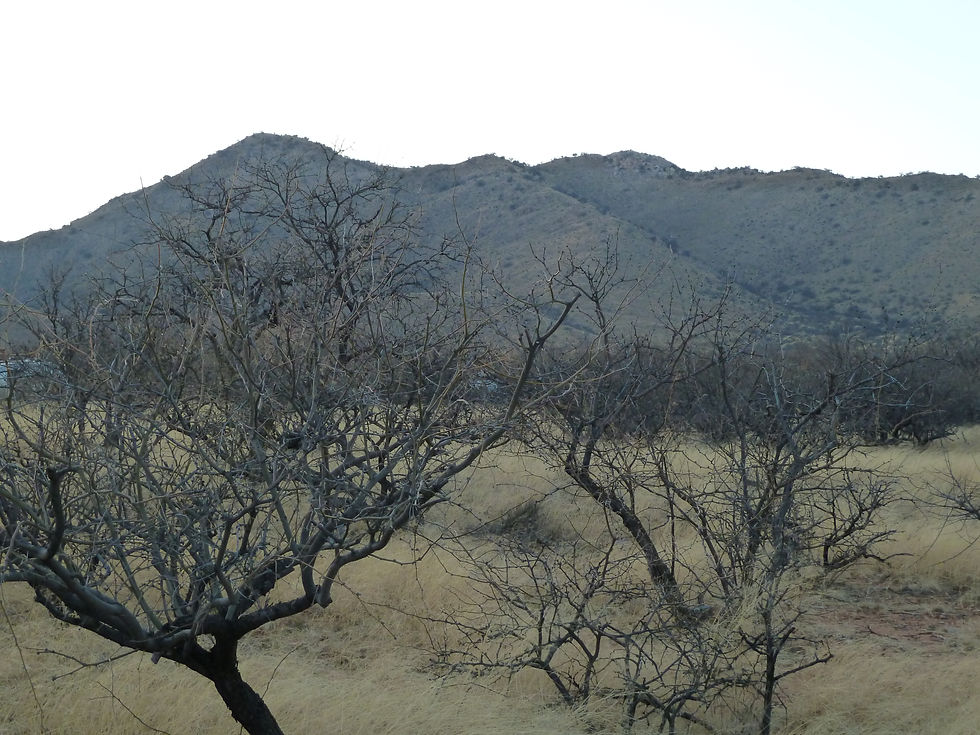
The park has more to offer than the cave. The Foothills Loop Trail and Ocotillo Trail combine for a pleasant 3.5-mile desert hike through the Whetstone Mountain foothills — ocotillo, saguaro, and desert scrub with views of the sky island ranges on the horizon. The Guindani Trail is the more ambitious option — a rugged 4-mile trek into the Coronado National Forest with the highest points offering sweeping views of southeastern Arizona's mountain ranges. Worth adding to a future visit.
The campground has 60 developed sites with water and electrical hookups, shower facilities, dishwashing sinks, and fire rings — a well-appointed developed campground that works well as a base for the cave and the surrounding area. The park is a designated Dark Sky Park — the stargazing from the campground on a clear night is exceptional.
A hummingbird garden near the Discovery Center attracts hummingbirds and other wildlife — a pleasant quiet stop before or after the cave tour.
The Discovery Center
Start here before the cave tour. Video presentation on the discovery story and the 25-year effort to protect and develop the park. Exhibits on cave geology, bats, conservation, and the formations you're about to see. Visually impaired visitors are provided the opportunity to touch fiberglass stalagmite reproductions — one of the more thoughtful accessibility features at any Arizona park. Gift shop and café on site.
Contact
Kartchner Caverns State Park
2980 AZ-90, Benson, AZ 85602(520) 586-2283
Hours (2026)
Discovery Center: 8:00 AM–5:00 PM daily
Cave tours: Scheduled departures throughout the day — check azstateparks.com
Closed Christmas Day
#KartchnerCaverns #LivingCave #Benson #ArizonaCaves #KublakKhan #AZStatePark #AZPlaces #CochiseCounty #WhetstoneMountains #ArizonaParks #CaveTouring #SodaStraw #ArizonaCamping #DarkSkyPark #SouthernArizona
PHOTO: The Big Room of Kartchner Caverns
By Mike Lewis - Own work, CC BY-SA 4.0, https://commons.wikimedia.org/w/index.php?curid=3752222
Campground

Arizona
2980 AZ-90, Benson, AZ 85602, USA

Cochise County
31°50'11.6"N 110°20'56.0"W
Elevation: 4,700 feet
Directions
From Benson, AZ: Head south on AZ-90 approximately 9 miles from the I-10 / AZ-90 junction. Watch for the park entrance on the right (west) side of AZ-90.
From Tucson, AZ: Take I-10 East approximately 45 miles to Exit 302 (AZ-90 toward Sierra Vista). Head south on AZ-90 approximately 9 miles to the park entrance on the right.


Best Seasons & Temperatures
Kartchner Caverns is a genuine four-season destination — the cave maintains 68°F and 99% humidity year-round regardless of outside conditions, making it equally rewarding in January cold or July heat. Summer visits are an excellent heat escape — the cave is dramatically cooler than the Sonoran Desert outside. The Big Room Tour is only available October through April when the bat colony is not in residence — plan accordingly if the Big Room is your priority. Reservations are strongly recommended year-round and essential on weekends and holidays — book at azstateparks.com well in advance. Annual shutdown week occurs mid-September when the Discovery Center and cave tours are unavailable while the campground and trails remain open.
Kartchner Caverns State Park living cave formations stalactites Benson Arizona Whetstone Mountains
July 22, 2003 | March 26–27, 2011