
Organ Pipe Cactus National Monument
AtoZ Places Bucket Location


Abandoned & Ghost Towns

Ancient Ruins

Caves

Desert

Forest

Historical

Hot Springs

Lakes & Rivers

National & State Parks

Peaks




Organ Pipe Cactus National Monument along Arizona's border with Mexico is the only place in the United States where the organ pipe cactus grows wild — a UNESCO biosphere reserve of 330,000 acres protecting one of the most biologically diverse stretches of Sonoran Desert on earth, with 1,700 species of plants and animals, historic ranch homesteads, a natural arch, the Kris Eggle Visitor Center, and Twin Peaks Campground surrounded by saguaro, cholla, ocotillo, and the namesake organ pipe cactus in every direction.
National & State Parks
Abandoned & Ghost Towns

Wildlife

Hiking

Exploring

Camping

Camping: Developed campsites available by reservation; fees required.

FEE: Required

Water: Available at developed campgrounds. Pack in extra supply for dispersed camping.
More Info
Plants Foraged
Nearby Locations
Organ Pipe Cactus National Monument
Organ Pipe Cactus National Monument sits at the edge of everything. 330,000 acres of Sonoran Desert against the Mexican border, 22 miles south of Why, Arizona — remote by any standard and deliberately so. The monument exists to protect what the surrounding landscape cannot: a nearly intact piece of the most biologically diverse desert in North America, centered on a cactus that grows wild in the United States only here.
Matthew, Luca, and I tent camped at Twin Peaks Campground December 29–31, 2020 — a New Year's Eve in the desert that delivered two hikes worth remembering and a day trip to the border that added a layer neither of us expected.
The Monument and Its Defining Cactus
Organ Pipe Cactus National Monument was established in 1937 — one of the National Park Service's early moves to protect not just scenic spectacles but entire ecological systems. It is a UNESCO International Biosphere Reserve containing more than 1,700 species of plants, mammals, reptiles, birds, and insects inhabiting its arroyos, bajadas, and the Ajo, Diablo, and Puerto Blanco mountain ranges — volcanic terrain that creates the elevation variation the monument's biodiversity depends on.

The organ pipe cactus — Stenocereus thurberi — is the monument's defining species and the reason it exists. Unlike the saguaro's single trunk, the organ pipe grows multiple vertical columns from a shared root system, the arms resembling the pipes of a pipe organ. It reaches 15–20 feet and lives 150 years or more, but it is freeze-intolerant in a way the saguaro is not — which limits its natural range in the United States entirely to this monument. In late spring the plant blooms at night — white and lavender flowers that open after dark and close by midmorning, pollinated by lesser long-nosed bats migrating north from Mexico to feed on the nectar. The fruit ripens in late summer and has been a significant food source for the Tohono O'odham people for centuries — a harvest tradition still practiced today. Everywhere you look in the monument the organ pipe stands alongside saguaro, cholla, ocotillo, palo verde, and ironwood in concentrations that represent the Sonoran Desert at its most intact.
Twin Peaks Campground
Twin Peaks Campground sits at the foot of the namesake twin volcanic peaks near the visitor center — 208 sites spread across a desert landscape that puts you in the middle of the cactus forest with the peaks rising behind and the desert spreading in every direction. Electric hookups at most sites. Tent camping available. Flush toilets and hot showers on site — a degree of comfort that makes this one of the more civilized desert camping experiences in the monument while still putting you directly in the landscape. Reservations strongly recommended — the campground fills for the winter season, particularly December through February.

We tent camped — the direct contact with the desert air and the night sky that a tent provides is the right way to experience the monument's most remarkable nighttime qualities. The campground is a designated International Dark Sky Park — the darkness here is genuine.
Hike One — Arch Canyon Trail to the Double Arch
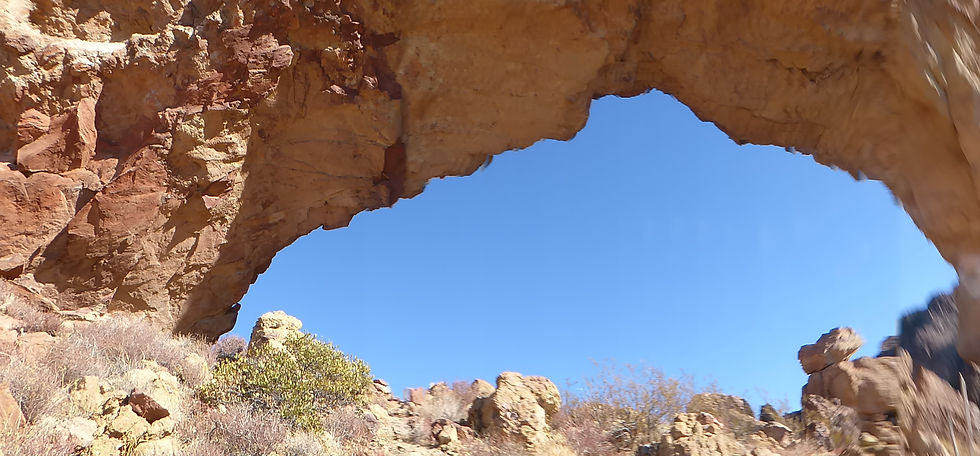
The Arch Canyon Trail is a different proposition from Alamo Canyon — it starts as a clear trail through the desert, moves into a canyon, and then gets steep and rocky as you approach the arch. The final approach requires scrambling on loose volcanic rock — attention to footing required, especially on the descent. The effort is worth it.
The arch — sometimes called the double arch — is a natural rock formation in the volcanic geology of the Ajo Mountains. From the arch the valley spreads below in every direction — the monument's desert floor, the cactus landscape stretching to the distant ranges, and the scale of 330,000-acre reserve much of it visible, in a single view. The kind of perspective that only comes from elevation earned on foot.
Hike Two — Alamo Canyon to the Ranch Homestead
Alamo Canyon Trail is one of the monument's most historically rewarding hikes — a 2-mile round trip into a narrow canyon that leads to the remains of the Alamo Ranch, a cattle operation that ran in this remote desert country in the early 20th century. The canyon itself is worth the hike regardless of the destination — the walls closing in, the vegetation thickening along the seasonal wash, the organ pipe cacti growing on the rocky slopes above.
At the end of the trail the ranch remnants sit in the canyon — old corrals, two buildings (one brick, one rock construction), water basins, and the general debris of a working operation abandoned to the desert. The corrals and water infrastructure tell the story of what it took to run cattle in this country — hauling water, fencing desert terrain, maintaining buildings that the desert was always trying to reclaim. The buildings still stand enough to explore and photograph. The brick building and the rock building read as different chapters of the same operation — different materials, different periods, and maybe different hands that built them.
Day Trip — Gachado Well Line Camp and the Border
On one of the days Luca and I went off-site to the Gachado Well Line Camp — a historic adobe structure associated with the monument's ranching and water management history, sitting near the international border. The adobe building at the well camp is remarkably intact — the walls still standing, the window and door openings still framing views of the surrounding desert.
From there we could see the border wall — the physical structure that marks where the United States ends and Mexico begins in this remote corner of the Sonoran Desert. On the other side, the community going about its day. The border at this location carries a different weight than any signage or map can convey — the wall is physical, the desert is continuous, and the people on both sides share the same landscape. It is worth seeing for anyone who visits this monument. The organ pipe cactus grows on both sides of that wall.
A Note on Safety — Border Region
Organ Pipe Cactus National Monument has had a complicated security history — the monument encompasses active smuggling corridors and has seen serious incidents over the years, including the 2002 murder of ranger Kris Eggle for whom the visitor center is now named. The NPS provides current safety information at the visitor center. The monument is safe for normal visitor use and the campground, visitor center, and main hiking trails are well within the established visitor area. Stay on established trails, be aware of your surroundings in remote areas, and follow any NPS guidance posted at the visitor center.
#OrganPipeCactus #SonoranDesert #ArizonaCamping #NationalMonument #DesertExploration #HikingAdventures
Campground

Dispersed Camping

Arizona
Organ Pipe Dr, Ajo, AZ 85321

Pima County
31°57'17.0"N 112°48'05.0"W
Elevation: 1,800 to 4,800 feet
Directions
Located in southern Arizona, south of Ajo, west of Tucson, and east of Yuma. From the NORTH: follow Arizona Highway 85 through Ajo and Why. The monument entrance is four miles from Why. The Kris Eggle Visitor Center is 22 miles (35.4 km) south of Why. From the EAST: take Arizona Highway 86 to Why, then turn left on Arizona Highway 85, heading south. From the WEST: follow I-8 to Gila Bend or I-10 to Buckeye, then turn south on Arizona Highway 85. From Sonoyta, MEXICO: travel north toward Lukeville, AZ on Mexico Route 2. The Kris Eggle Visitor Center is five miles north of Lukeville on Highway 85.


Best Seasons & Temperatures
Winter and spring are the primary seasons — December through April when temperatures are comfortable for camping and hiking. Our December visit was ideal — cool days in the 60s, cold nights in the 40s, and the campground lively with winter visitors. Spring brings the monument's famous wildflower blooms when winter rains are adequate — February through April can produce extraordinary displays across the desert floor. Summer is extreme — temperatures regularly exceed 100°F and humidity drops to near zero. Late summer monsoons bring lightning shows and afternoon storms but temperatures remain dangerous for extended outdoor activity. Avoid camping June through September.
Organ Pipe Cactus National Monument - Ajo, Arizona
December 29-31 2020