
Sun Tunnels — Nancy Holt
AtoZ Places Bucket Location


Abandoned & Ghost Towns

Ancient Ruins

Caves

Desert

Forest

Historical

Hot Springs

Lakes & Rivers

National & State Parks

Peaks


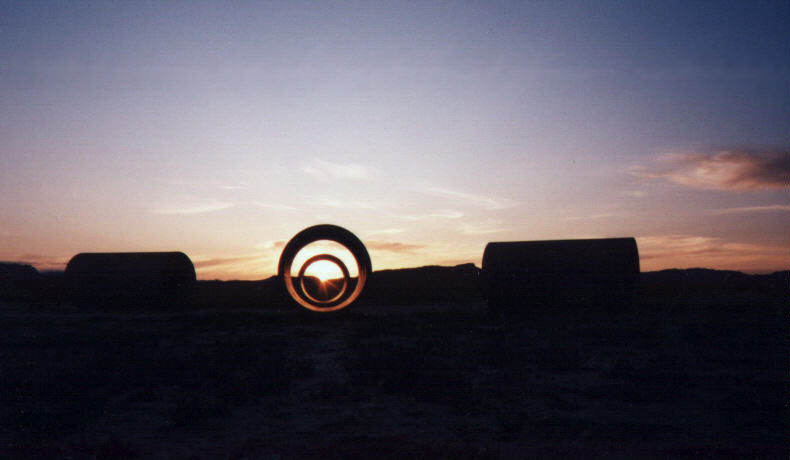
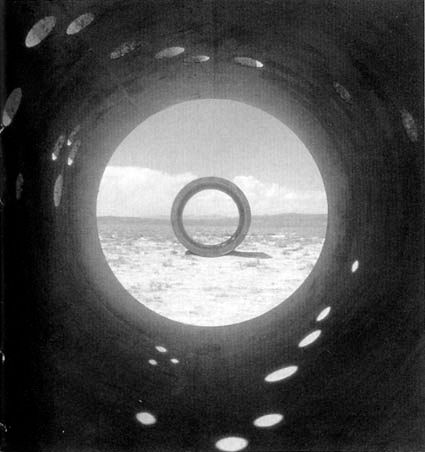


Sun Tunnels is one of the most significant works of Land Art in North America — four massive concrete tunnels arranged in an X configuration in the Great Basin Desert near Lucin, Utah, aligned with the rising and setting sun of the summer and winter solstices, pierced with holes that cast constellation patterns of light across the dark interiors, and built on forty acres of desert purchased by artist Nancy Holt specifically as the site for the work in 1973 to 1976.
Historical
Desert

Exploring
Cell service nonexistent — download maps and have paper backup
Dispersed camping available in surrounding BLM land

Free entry — no entrance fee
No facilities on site — no water, no restrooms
More Info
Plants Foraged
Nearby Locations
Sun Tunnels — Nancy Holt
Four miles southeast of the ghost town of Lucin in the flat valley of the Great Basin Desert, four massive concrete tunnels sit in the Utah desert like a 20th century Stonehenge — aligned with the solstice sun, pierced with constellation holes, and built on land that artist Nancy Holt purchased specifically because it was remote, flat, and empty enough to hold the scale of the idea she had been developing since 1973.
Glen and I visited with friends in 1995 — a trip into the northwestern Utah desert to see one of the more unusual and more rewarding art destinations in the American West. Sun Tunnels is the kind of place that rewards the drive precisely because the drive is part of the work. The remoteness is not incidental — it is the point.
The Work — What Sun Tunnels Is
Sun Tunnels (1973–76) is a Land Art installation by sculptor and filmmaker Nancy Holt — four concrete tunnels each 18 feet long and 9 feet in diameter, arranged in an X configuration on forty acres of desert that Holt purchased in 1974 specifically as the site for the work. The tunnels are aligned with the angles of the rising and setting sun on the days of the summer and winter solstices — around June 21 and December 21 — so that on those two days the sun rises and sets precisely framed within the tunnel openings, visible as concentric circles of light from inside.

Each tunnel is pierced with holes of varying sizes — the holes drilled in the pattern of four constellations: Draco, Perseus, Columba, and Capricorn. During the day these holes cast spots of light across the dark interiors of the tunnels — appearing almost like stars, inverting the sky-ground relationship by bringing the night sky’s pattern down to the desert floor. As Holt described it: “It’s an inversion of the sky/ground relationship — bringing the sky down to the earth.”
The four tunnels are arranged so that when standing inside one, looking through the opening, another tunnel is visible in the distance — the X configuration creating sightlines across the desert in all four solstice directions simultaneously. The total length of the X configuration is 86 feet.
Holt described the conceptual foundation in her own words: “The idea for Sun Tunnels became clear to me while I was in the desert watching the sun rising and setting, keeping the time of the earth.” The work marks cyclical time — the annual solar calendar made physical and permanent in concrete on the desert floor.
Nancy Holt — The Artist
Nancy Holt (1938–2014) was born in Worcester, Massachusetts and raised in New Jersey. She is internationally recognized for Sun Tunnels as a pioneering work of Land Art. Holt’s work consistently engaged the celestial — stars, sunlight, and orbiting bodies — in works that used the landscape itself as both medium and frame.
Holt was married to artist Robert Smithson — creator of Spiral Jetty (1970) on the north shore of the Great Salt Lake in Utah, one of the other defining works of the Land Art movement. The two works — Sun Tunnels and Spiral Jetty — represent the two most significant Land Art installations in Utah and among the most important in North America. Both are now owned and stewarded by Dia Art Foundation, which acquired Sun Tunnels in 2018 with support from the Holt/Smithson Foundation.
Holt worked on Sun Tunnels from 1973 to 1976 — consulting with an astrophysicist at the University of Utah about the precise angles of the solstices at the latitude of her land, working with contractors unfamiliar with art installations in the remote desert, and documenting the construction in a film she produced of the process. She died in 2014. Sun Tunnels continues to be visited year-round.
The Land Art Movement
Sun Tunnels belongs to the Land Art movement — also called Earthworks or Environmental Art — that emerged in the late 1960s and 1970s when a generation of artists including Holt, Smithson, Michael Heizer, and Walter De Maria moved their work out of galleries and into the landscape itself. The American West provided the scale, the remoteness, and the geological drama that the work required. Utah, Nevada, and New Mexico became the primary sites.
The defining characteristic of Land Art is that the work cannot be separated from its location — it cannot be moved to a museum, photographed in full, or experienced without the specific landscape that surrounds it. Sun Tunnels without the Great Basin Desert flat, without the specific light of the Utah sky, without the remoteness of the drive to reach it — is not Sun Tunnels. The land is the art.
The Solstice Experience
The two days each year when Sun Tunnels fully reveals its alignment — the summer solstice around June 21 and the winter solstice around December 21 — are when the work is most visited and most dramatic. On solstice mornings crowds gather before dawn in the dark desert to watch the sun rise precisely centered in the tunnel opening — the concrete frame and the rising sun forming concentric circles of light that the entire work was designed to produce.
Our 1995 visit was on the summer solstice — June 21, 1995 — which delivered exactly what the work was designed to produce on that one day each year. Watching the sun set precisely centered in the tunnel opening — the concrete frame and the descending sun forming concentric circles of light in the Great Basin Desert — is the full Sun Tunnels experience. It is the reason Nancy Holt spent three years designing and building the work with an astrophysicist’s input on the exact solstice angles at this latitude. We were there for it. The constellation holes, the desert scale, the sightlines between tunnel openings — all of that is present on any visit. But the solstice alignment is what Sun Tunnels was built for, and a June 21 sunset in the Utah desert inside one of those tunnels is something to see.
Practical Notes
Sun Tunnels is located on private land — forty acres purchased by Nancy Holt in 1974 — now owned by Dia Art Foundation. The site is open to visitors year-round at no charge. There are no facilities — no restrooms, no water, no services of any kind. The nearest settlement is Lucin, four miles away — now essentially a ghost town with no remaining services.
The access road is several miles of dirt and gravel from the highway — patchy and rough in sections but passable for most vehicles in dry conditions. The road may become impassable after rain or snow — verify conditions before the drive. Download maps before leaving cell service range — there is no cell service at the site.
More Information:
Access road: several miles of dirt and gravel — passable for most vehicles in dry conditions, may be impassable after rain or snow
Peak visit dates: summer solstice (~June 21) and winter solstice (~December 21)
Owned and stewarded by Dia Art Foundation since 2018
Photographic and video material of Sun Tunnels is copyright protected — Holt/Smithson Foundation / Artists Rights Society (ARS)
Contact:
Dia Art Foundation
diaart.org/visit/visit-our-locations-sites/nancy-holt-sun-tunnels
Hours: Open year-round, no set hours — daylight visits recommended
Admission: Free
Sun Tunnels (1973–76) by Nancy Holt. © Holt/Smithson Foundation / Licensed by Artists Rights Society (ARS), New York.
#SunTunnels #NancyHolt #LandArt #Earthworks #GreatBasinDesert #Lucin #UtahDesert #BoxElderCounty #AZPlaces #SolsticeArt #EnvironmentalArt #DiaArtFoundation #UtahArt #SpiralJetty #DesertArt
Utah
843P+FF Lucin, UT

Box Elder County
41°18'12.6"N 113°51'49.8"W
Elevation: 4,400 feet
Directions:
From Salt Lake City, UT:
Head west on I-80 approximately 120 miles to Wendover. Continue west on I-80 into Nevada to Exit 378 (Oasis). Head north on NV-233 approximately 23 miles to Montello, NV — last gas, water, and food before the site. Continue north 11 miles to the Utah state line where NV-233 becomes UT-30. Continue east on UT-30 approximately 9 miles. Watch for a sign pointing south toward Lucin. Take the right-hand gravel road south approximately 10 to 11 miles to the Sun Tunnels site.
From Wendover, UT/NV:
Head west on I-80 into Nevada to Exit 378 (Oasis). Follow directions above from Oasis.


Best Seasons & Temperatures
Sun Tunnels is a year-round destination — the two peak visit dates are the summer solstice (around June 21) and the winter solstice (around December 21) when the tunnel alignments with the rising and setting sun are at their most dramatic. Solstice visits typically draw crowds who arrive before dawn — plan accordingly if visiting on those dates. Non-solstice visits deliver the constellation holes, the desert setting, the scale of the tunnels, and the sightline alignments in any season. Spring and fall offer the most comfortable temperatures for an extended desert visit. Summer heat in the Great Basin Desert is significant — bring significantly more water than you think you need. Winter visits are possible but the access road may become impassable after snow — verify conditions before the drive. The site has no shade other than the tunnels themselves.
Sun Tunnels Nancy Holt land art concrete tunnels Great Basin Desert Lucin Utah solstice constellation holes AZ Places
June 21, 1995