
West Fork Oak Creek Trail
AtoZ Places Bucket Location


Abandoned & Ghost Towns

Ancient Ruins

Caves

Desert

Forest

Historical

Hot Springs

Lakes & Rivers

National & State Parks

Peaks







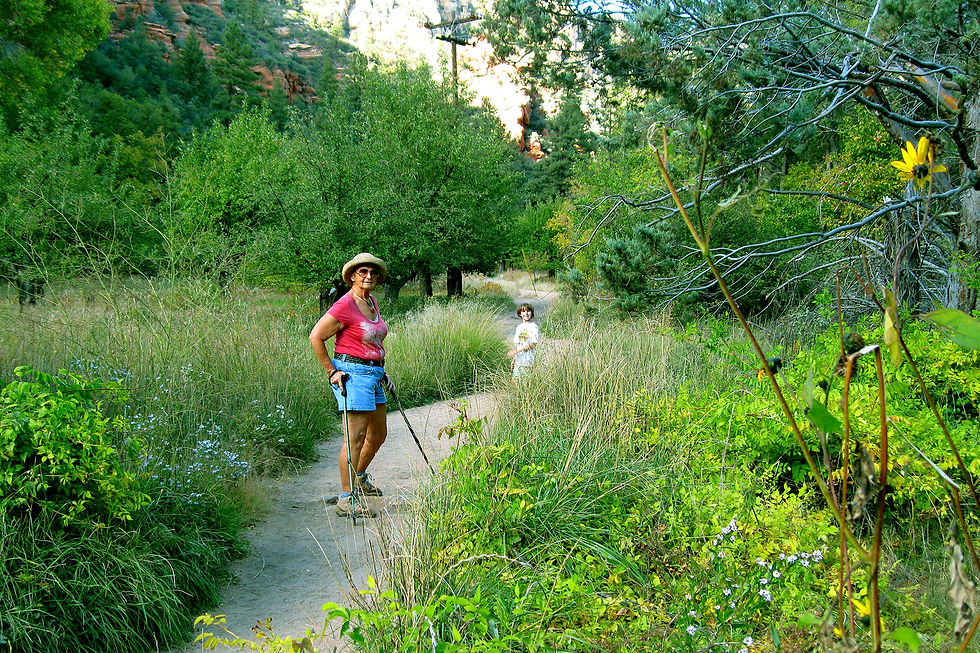


West Fork Oak Creek Trail in Oak Creek Canyon is consistently ranked among the finest hikes in Arizona — a 6.6-mile round trip through a narrowing red rock canyon alongside the West Fork of Oak Creek, past the ruins of the historic Mayhew Lodge, beneath towering cliffs hundreds of feet tall, with thirteen creek crossings and a canyon that gets more dramatic the further you go.
Historical
Forest
Lakes & Rivers

Hiking

America the Beautiful pass accepted for parking

Cell service limited in backcountry — download maps before hiking
Dogs should remain on leash
Water: Bring your own — no water on trails
More Info
Plants Foraged
Nearby Locations
Oak Creek (Red Rock Crossing)
Oak Creek (Midgley Bridge)

Red Rock State Park

West Fork Oak Creek Trail
Some trails earn their reputation. West Fork is one of them.
Eleven miles north of Sedona on Highway 89A, the Call of the Canyon day-use area marks the start of one of the most consistently beautiful hikes in the American Southwest.
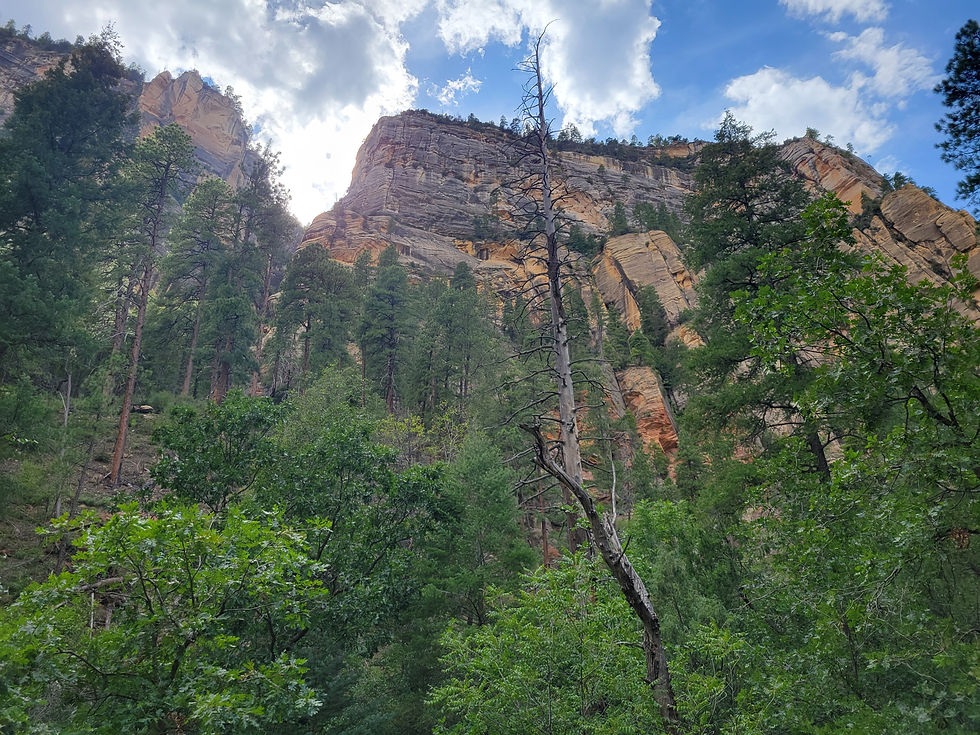
The West Fork of Oak Creek cuts through a narrowing canyon of deep red rock — primarily the Hermit Formation and Schnebly Hill Formation at creek level, with the walls transitioning to yellower Coconino sandstone higher up and whitish Kaibab limestone near the rims. The deep red color throughout Sedona's canyon country comes from hematite — iron oxide staining the sandstone layers that give the area its signature color. The walls rise hundreds of feet on both sides, a canopy of Arizona sycamore, cottonwood, box elder, Douglas fir, and ponderosa pine filtering the light, and the creek crossing the trail thirteen times between the trailhead and the point where the maintained trail ends and the canyon narrows to a slot.

Four visits across seventeen years — June 2004, August and October 2006, October 2012, and August 2021 — each one a different season and a different group, but the same canyon delivering something worth returning for every time.
The History — Mayhew Lodge and The Call of the Canyon
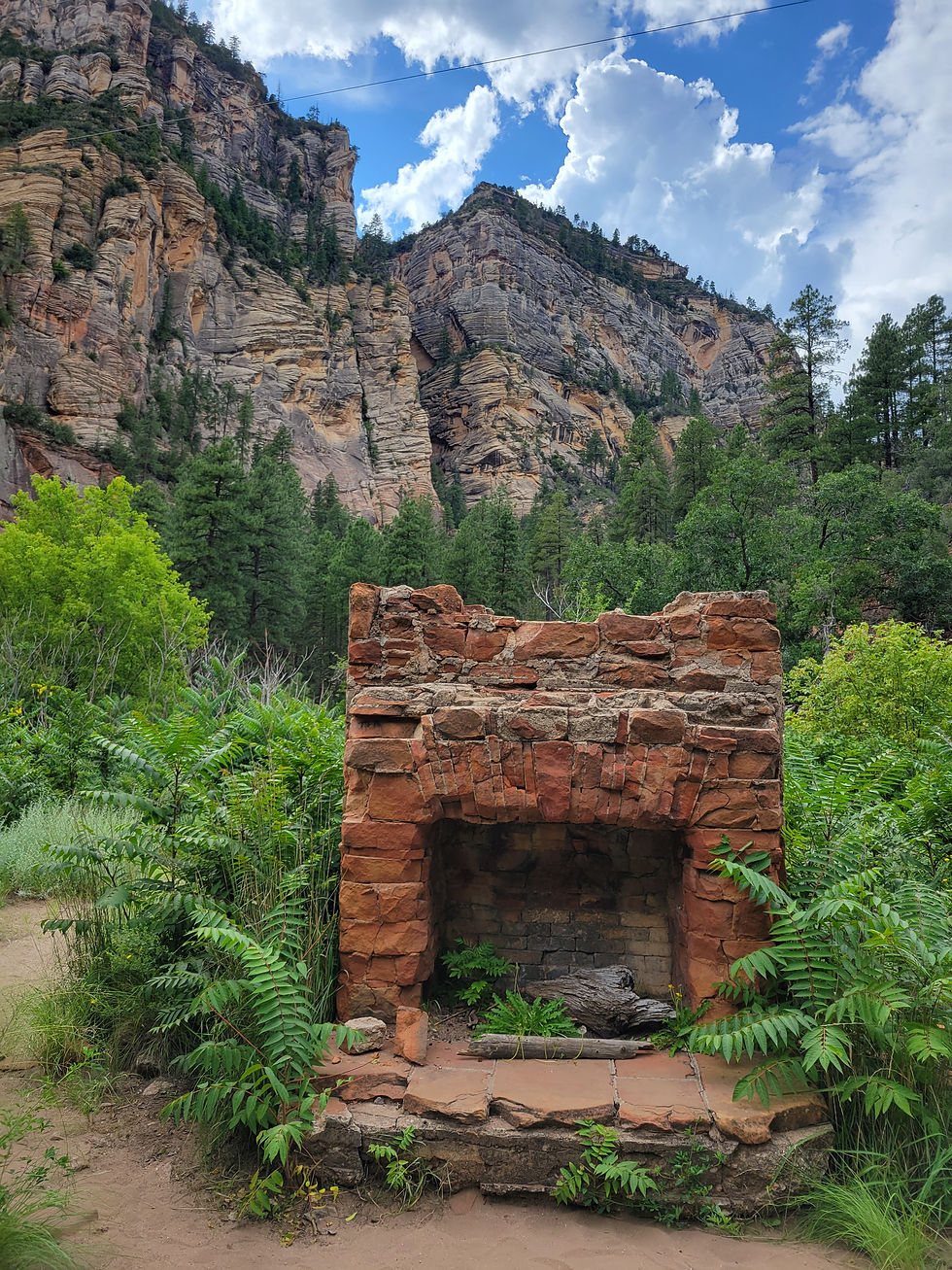
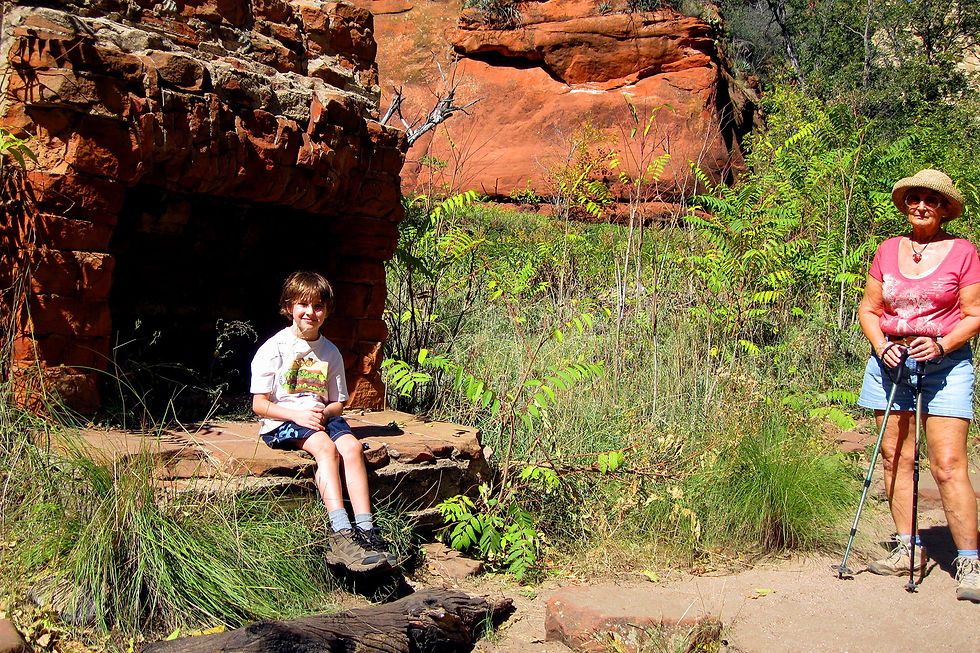
The trail begins not in wilderness but in history. Just beyond the footbridge across Oak Creek, the path passes through a clearing where the Mayhew Lodge once stood — remnants of stone walls, fireplace foundations, a cliff house carved into the red rock, and the ghost of an orchard where apple trees planted a century ago still occasionally bear fruit.
The lodge was built in the 1920s by photographer Carl Mayhew, who fell in love with the canyon after working on the 1922 silent film version of Zane Grey's novel The Call of the Canyon — itself inspired by the canyon and filmed here on location. The lodge opened in 1925, becoming one of the first tourist facilities in the Sedona area, attracting visitors who came for the fishing, the scenery, and the canyon air. The National Forest purchased the property in the late 1960s. Fire destroyed most of the structures shortly after. What remains — the stone walls, the cliff house, the irrigation channels, the apple trees — is listed on the National Register of Historic Places. The trailhead at Call of the Canyon is named for the Zane Grey novel.
The first apple trees planted here still exist in the orchard area. Wild blackberries grow along the trail. The raven that walked down the trail ahead of us on our August 2021 visit appeared to have found an apple — carrying it deliberately down the path before us as if leading the way.
The Trail

The first quarter mile follows the paved Call of the Canyon Nature Trail from the parking area to the footbridge. Cross the bridge, veer left, and the West Fork Trail begins — a flat, wide, well-maintained dirt path that follows the creek through corridor after corridor of increasing canyon drama.
Thirteen shallow creek crossings in the first 3.3 miles — the maintained section of the trail. Water shoes or shoes you don't mind getting wet are the practical choice. The trail is soft packed dirt through much of its length — fine enough for barefoot hiking where the terrain allows, as I discovered on our August 2021 afternoon hike. A soft dirt trail through a canyon corridor with minimal debris underfoot is one of the rare situations where barefoot hiking genuinely works.
Beyond the 3.3-mile turnaround the canyon narrows to a slot — walls closing in, the creek unavoidable, wading required. The full 14-mile through-hike to the canyon's end is a backcountry undertaking with camping required. Most visitors turn around at the maintained section's end.
Our Visits
June 2004 and 2006 — Elfriede and Herman

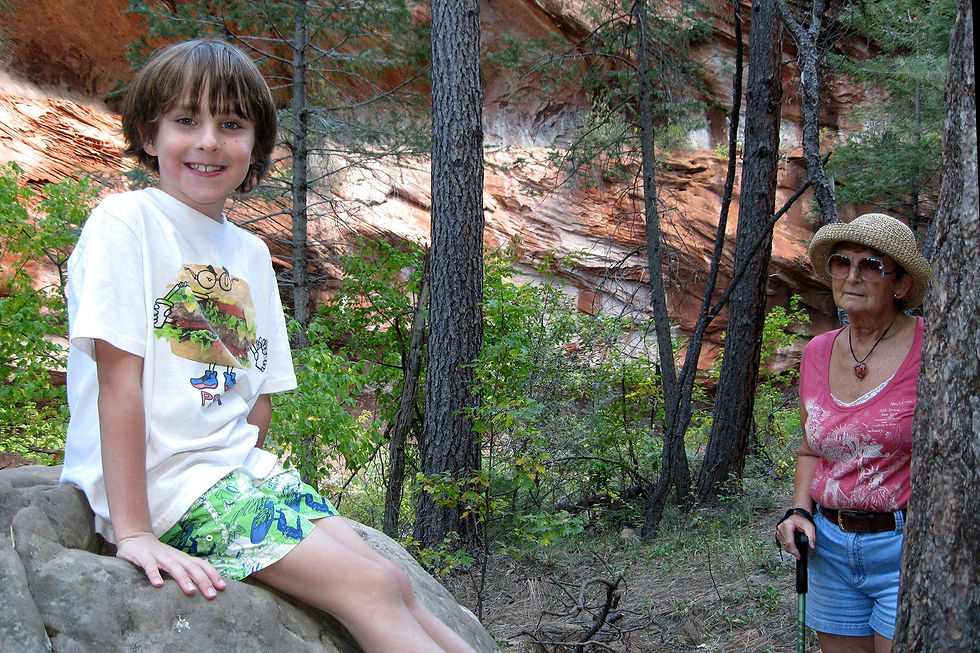
Three visits by Elfriede and Herman across the mid-2000s — June 2004 and both August and October 2006. Their photos and experiences are part of this record — West Fork was clearly a place that earned repeat visits from them. The October visit in particular would have caught the canyon in fall color — the sycamores and cottonwoods turning gold along the creek, the red rock walls above, and the light that only October produces in Oak Creek Canyon.
October 2012 — Luca, Elfriede, and Herman

Luca's first West Fork visit — joining Elfriede and Herman for a fall trip that brought the next generation to the same canyon. The photos from this visit are part of the AZ Places record of this trail.
August 29, 2021 — Matthew and I
During a week-long stay in Sedona August 28–September 4, 2021, Matthew and I hiked West Fork on the afternoon of August 29. We started at the ruins around 3 PM — checking out the Mayhew Lodge remnants before turning into the canyon. The late start is not the conventional recommendation, but the afternoon light in the canyon in August has its own quality — the walls catching the angled sun in ways that morning light doesn't produce.
What we saw on the hike:
Tall red cliffs rising hundreds of feet from both sides of the narrow corridor — the canyon closing and opening in turns, each bend revealing a new configuration of wall, water, and tree canopy. The creek running clear and cold across the crossings.
Mushrooms growing on fallen logs along the trail — the soft August moisture after monsoon rains producing exactly the kind of fungal growth you find in shaded, humid canyon bottoms. White spiked ball mushrooms emerging from the ground — distinctive, unusual, and photogenic.
A raven walking deliberately down the trail ahead of us, carrying what appeared to be a piece of apple in its beak — unhurried, purposeful, completely unbothered by our presence. The orchard at the Mayhew Lodge ruins still produces occasionally. Apparently the ravens know this.
A large lizard with a snake-like pattern — brown and tan scales with a t
ail fading from brown to gray and a gray head — moving slowly through the canyon vegetation. This is the Arizona Alligator Lizard (Elgaria kingii) — a large, slow-moving lizard with a distinctively elongated body and short legs that give it an almost serpentine appearance when moving through leaf litter and undergrowth. Named for its keeled, overlapping scales that resemble alligator skin. Common in the riparian canyon habitats of central and southern Arizona at mid elevations — West Fork Oak Creek Canyon is prime habitat. Frequently seen in shaded, moist areas along creek corridors exactly like this one.
A brown cluster in a tree that drew our attention — large, dense, and organic looking, neither obviously a nest nor obviously dead wood. Most likely a witch's broom — a dense abnormal growth caused by mistletoe infection or fungal parasitism, common in the conifers and sycamores of Oak Creek Canyon. They look like something put there deliberately. They're entirely natural.
A perfect heart-shaped leaf on the trail — the kind of small found object that earns a photo and stays in the memory longer than the grand canyon views.
I hiked in barefoot for a stretch — the soft packed dirt trail through the canyon floor is genuinely suited for it where the terrain allows. The creek crossings brought the shoes back on.
We returned to the trailhead around 7:30 PM — the last of the light gone, walking the final stretch back in the dark. The canyon in the dark is a different experience from the canyon in afternoon light. Quieter. The creek audible but the walls invisible above. Worth noting as an experience in itself — if you're prepared for it.
Fall Color
West Fork is consistently regarded as one of the finest fall color destinations in Arizona — the sycamores, cottonwoods, and box elders turning gold and amber in October, reflected in the creek pools, framed by the red sandstone above. The October visits in 2006 and 2012 would have caught the canyon at peak fall color. If you can only make one visit, make it October.
Crowds
West Fork is one of the most popular trails in Arizona — AllTrails lists it among the top-reviewed trails in the state. Weekends in spring and fall can produce parking lines before the gate opens at 8 AM. Arrive early, go on weekdays, or visit in summer when the heat filters the casual visitors and leaves the canyon to the ones who came prepared. Our August afternoon visit gave us the trail largely to ourselves.
More Information (2026)
Parking fee: $12/vehicle — America the Beautiful pass accepted ($5 parking fee with pass)
Red Rock Pass: $5/day, $15/week, $20/annual — accepted at Call of the Canyon
Gate opens approximately 8 AM — arrive early on weekends and fall season
Trail: 6.6 miles round trip to maintained end, flat, minimal elevation gain
13 creek crossings — water shoes or shoes you don't mind getting wet recommended
Beyond mile 3.3 the canyon narrows and wading is required — full 14-mile through-hike requires overnight camping permit
Mayhew Lodge ruins at start of trail — worth exploring before entering the canyon
Apple orchard remnants still exist — ravens know this
Fall color peak: typically mid to late October
#WestForkOakCreek #CallOfTheCanyon #OakCreekCanyon #SedonaHiking #ArizonaHiking #MayhewLodge #RedRock #CoconinoNationalForest #AZPlaces #FallColor #CanyonHiking #OakCreek #SedonaArizona #ArizonaTrails #RedRockPass
Arizona
W Fork Trail, Oak Creek Canyon, AZ 86336, USA

Coconino County
34°59'26.3"N 111°44'33.1"W
Elevation: 5,320 feet (trailhead) — minimal elevation gain on trail
Directions
From Sedona (the Y intersection): Head north on AZ-89A approximately 11 miles through Oak Creek Canyon. Watch for the Call of the Canyon day-use area between mileposts 384 and 385 on the left (west) side of the highway. The parking area is clearly signed. ($12/vehicle parking fee — cash accepted, Red Rock Pass or America the Beautiful pass also accepted for $5 parking)
From Flagstaff: Head south on AZ-89A approximately 17 miles. Call of the Canyon day-use area is on the right (west) side of the highway.


Best Seasons & Temperatures
West Fork is a four-season trail but each season delivers a different experience. Fall — October specifically — is the peak season for color: sycamores and cottonwoods turning gold against the red canyon walls. Spring brings wildflowers in the meadow at the trailhead and the creek at its fullest flow. Summer in the canyon is cooler than Sedona below — a genuine heat escape, best visited early morning or late afternoon as we experienced in August 2021. Winter visits are quiet and uncrowded — the creek may be low and the sycamores bare but the canyon walls are unchanged. Crowds peak on spring and fall weekends — arrive before 8 AM or visit midweek. No cell service in the canyon — download maps before leaving the parking area.
West Fork Oak Creek Trail Call of the Canyon Sedona Arizona red cliffs canyon creek hiking Mayhew Lodge ruins
June 19, 2004 | August 23 & October 27, 2006 | October 2012 | August 29, 2021