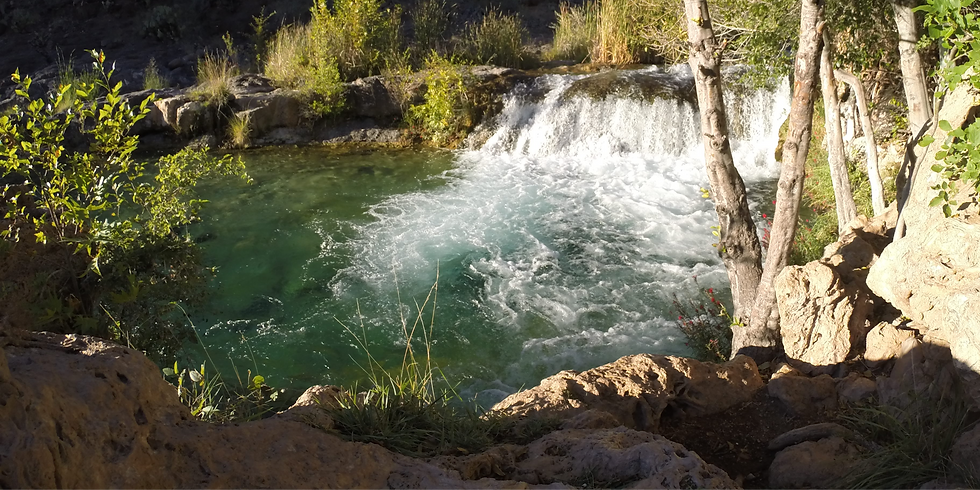
Fossil Creek Wild and Scenic River
AtoZ Places Bucket Location


Abandoned & Ghost Towns

Ancient Ruins

Caves

Desert

Forest

Historical

Hot Springs

Lakes & Rivers

National & State Parks

Peaks








Fossil Creek is one of only two Wild and Scenic Rivers in Arizona — a spring-fed desert oasis discharging over 30 million gallons of 72°F water daily from the base of the Mogollon Rim, with crystal-clear turquoise pools, travertine waterfalls, lush riparian habitat, and one of the most dramatic creek restoration stories in the American Southwest.
Desert
Lakes & Rivers

Wildlife

Hiking

Exploring

Camping

Cell service may be limited — download maps before you go
Fire Restrictions: No campfires — gas stoves only
Pets should remain on leash.

Seasonal Permits Required
Toilets: Vault toilets available.
Water: No potable water; pack your own supply.
More Info
Plants Foraged
Wild Blackberry

Nearby Locations
Verde Hot Springs

Fossil Creek Wild and Scenic River
Yes, you're still in Arizona.
Fossil Creek is the kind of place that stops people mid-sentence. Blue-green water pooling beneath a roaring waterfall. Lush riparian growth lining the banks. Colorful birds darting overhead. The water clear enough to see every rock on the bottom in six feet of water. In the middle of the Sonoran Desert, just south of the Mogollon Rim, this perennial spring-fed creek has been flowing through this canyon for thousands of years — and for most of the 20th century, almost nobody knew it existed.
We have visited four times across 25 years — each visit a different version of Fossil Creek and a different version of who we were when we arrived.
How the Creek Works — 30 Million Gallons a Day
Fossil Creek is one of two Wild and Scenic Rivers in Arizona. It is fed by springs that descend from the cliffs of the Mogollon Rim — more than 30 million gallons of water discharged each day at a constant temperature of approximately 70°F. These natural springs feed enough water to keep the river flowing year-round regardless of rainfall. The constant flow of warm, calcium carbonate-rich water deposits travertine — the same mineral that forms stalactites in caves — along the creek bed and over its falls, creating the distinctive layered rock formations and the turquoise color that makes Fossil Creek photographs look implausible. The fossil-like mineral formations gave the creek its name.
Fossil Creek eventually flows down into the Verde River — part of the same wild river corridor that connects Fossil Springs on the Mogollon Rim to the lower Verde Valley.
The Dam and Its Removal — A Restoration Story
In 1908, a hydroelectric dam was completed on Fossil Creek to divert water to nearby power plants generating electricity for mining communities including Jerome. For nearly a century, the dam diverted most of the water away from the creek channel — reducing the once-abundant perennial stream to a trickle and devastating the riparian ecosystem. Fish populations collapsed. The lush corridor dried up.
In 2005, Arizona Public Service removed the Childs and Irving hydroelectric dams from Fossil Creek — one of the largest dam removal and river restoration projects in the American Southwest. Within years of the dam removal, the creek rebounded dramatically. Native fish returned. Riparian vegetation reclaimed the corridor. The travertine formations reformed. Fossil Creek became a showcase for what river restoration can accomplish.
On our August 1997 visit — just eight years before the dam removal — the creek was a fraction of what it is today. Glen and I stopped to look at it on the way to the Verde River. We knew something was there but the full expression of what Fossil Creek can be was still years away.
Our Four Visits
August 9, 1997 — Before the Dam Removal
Glen and I stopped at Fossil Creek on the way to the Verde River — eight years before the dam removal and a completely different version of what this place is today.
The Childs hydroelectric power plant was still operating then — diverting most of Fossil Creek's natural flow through the power generation system. What the plant released back into the landscape was a man-made river of sorts — the discharge from the Childs plant that flowed across the desert floor toward the Verde River. We sat in that outflow water before it reached the Verde — not in the creek itself but in one of the channels the plant had created.
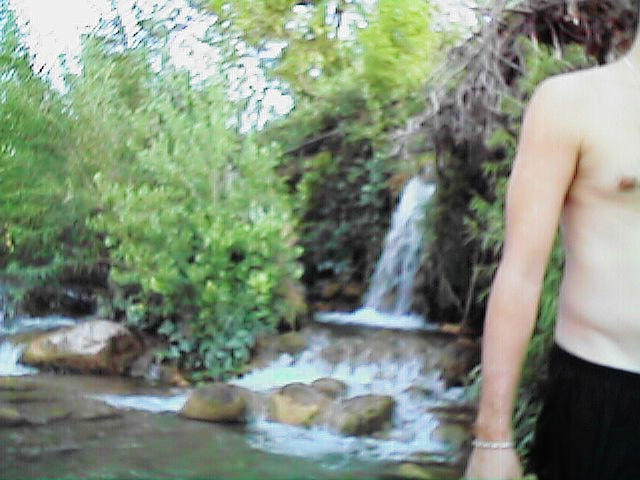
What we found there was remarkable regardless of its artificial origin. There was a series of rock basins, likely hand created — perfect for sitting in as the water cascaded through and around them. There was a cove where the flow dropped over a ledge and created a natural shower — cold water falling from above, surrounded by blackberry bushes. A genuinely beautiful spot that existed only because of the dam and its discharge — and that would disappear when the dam came out.
We watched the clear released water meet the brown Verde River at the confluence — the contrast between the two was vivid and immediate. Clean spring-fed water running into the turbid Verde, the two streams mixing and blurring at the join point.
On later visits I could still see traces of where this outflow river had run — the channel it had worn, the line of vegetation that had grown up along its banks. The ghost of a man-made stream in the desert. By 2005 the dam was gone and Fossil Creek itself was reclaiming its natural course.
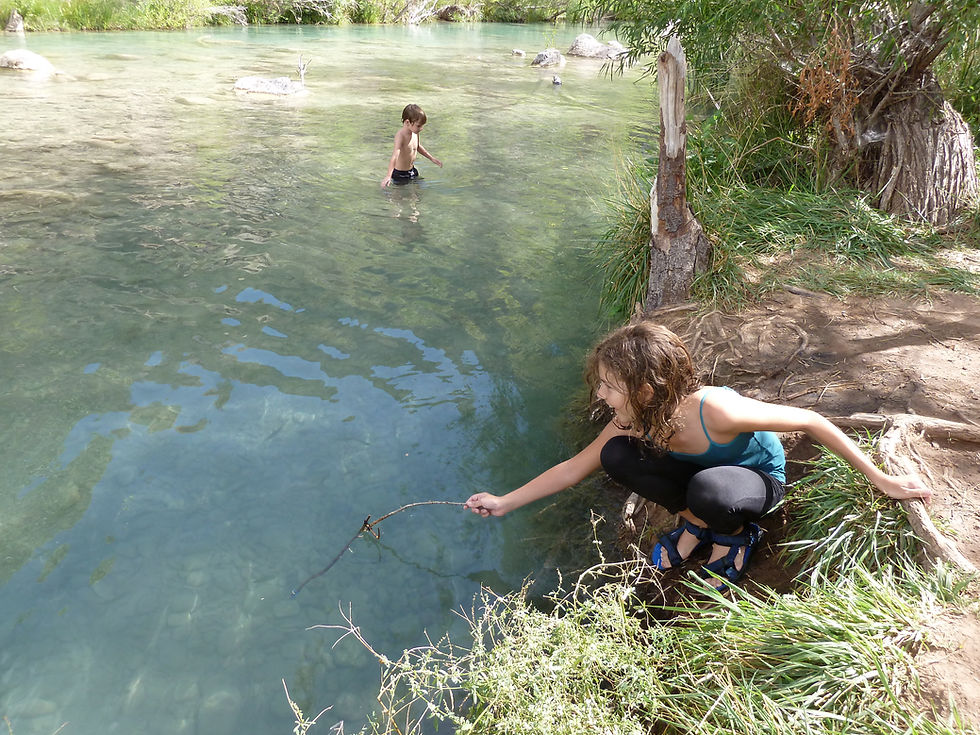
August 14, 2011 — Swimming at the Sally May Recreation Site below the main permitted area. The kids swam. We found a bat that had come down to the ground — still and alive, grounded and disoriented. A memorable and slightly unsettling encounter at the water's edge. By 2011 the creek had been flowing freely for six years following the dam removal and the recovery was already remarkable.
September 16, 2016 — We had a permit for the Fossil Creek Waterfall Trail Trailhead. A late afternoon start meant we didn't have time to reach the main waterfall — we hiked a short distance to the first small fall and played and swam in that area. We were among the last visitors out. Drove out in the dark. On the drive out a white owl appeared in the headlights — ghostly and still on the road for a moment, then gone. Worth noting that this is a place to arrive early. Time constraints in a canyon with a cutoff gate closing at 3 PM mean a late start costs you the best of what Fossil Creek has to offer.
2022 or 2023 — Drove the Fossil Creek Road through to the Verde River, stopping to see the creek along the way. The road itself is an experience — 15 rough miles of dirt and rock that is best traveled in a high-clearance vehicle and should never be attempted after rain.
The Waterfall
The main waterfall is the destination for most permit holders — clear water dropping into a deep turquoise pool with the travertine-coated walls of the canyon on both sides. The area around the swimming hole is suitable for setting up chairs and spending the day. On busy summer weekends it is extremely crowded — the permit system manages volume but the permitted number still adds up. Weekday visits and off-season visits are dramatically more peaceful. A swim-through cave above the dam waterfall is accessible via the Bob Bear Trail from Strawberry — a separate trailhead and permit from the downstream waterfall access.
The Permit System
Since 2016 a parking permit reservation system has managed access to protect the fragile ecosystem. Permits are $6/vehicle and required April 1 through October 1. Permits must be reserved in advance through Recreation.gov — they go on sale the first of the month one month in advance and sell out quickly for summer weekends. Maximum of one permit per person per calendar month.
⚠️ 2026 update: Fossil Creek is open Fridays, Saturdays, and Sundays only during the April 1–October 1 permit season. Closed Monday through Thursday with vehicles prohibited from parking within the permit area or at Bob Bear Trailhead. Verify current schedule at Recreation.gov before booking.
No permits required October 2 through March 31. No camping in the permit area April 1 through October 1. Off-season dispersed camping allowed in designated areas outside the closed zones.
The Access Road
The dirt forest road — Forest Road 708 / Fossil Creek Road — is rough, and you'll be on it for 15 miles from Camp Verde. High-clearance four-wheel drive is strongly recommended. Do not depend on Google Maps or GPS for directions — use the Forest Service directions specifically. Do not attempt after rain — the road becomes extremely muddy, slippery, and potentially impassable. The gate closes at 3 PM during permit season — you may exit after 3 PM but cannot enter. Plan your visit accordingly.
More Information
Permit required April 1–October 1: $6/vehicle — Recreation.gov, book on first of month one month in advance
Maximum one permit per person per calendar month — maximum group size 12
⚠️ 2026: Open Fridays, Saturdays, and Sundays only during permit season — closed Monday through Thursday
Gate closes at 3 PM during permit season — you may exit after 3 PM but cannot enter after 3 PM
Off-season (October 2–March 31): no permits required, no fees, gates open 24 hours weather permitting
Off-season camping allowed in designated areas outside closed zones — not between Fossil Creek Bridge and dam
High-clearance 4WD recommended for FR 708 — do not attempt after rain
Do NOT use Google Maps or GPS on FR 708 — use Forest Service directions
Sally May Recreation Site: downstream of main permit area on Childs Road (FR 502)
#FossilCreek #WildAndScenicRiver #ArizonaWaterfall #FossilCreekWilderness #TontoNationalForest #CoconinoNationalForest #ArizonaSwimming #TurquoiseWater #ArizonaHiking #DamRemoval #AZPlaces #GilaCounty #SallyMay #FossilSpring #ArizonaWater
Dispersed Camping

Arizona
98VX+VP Pine, AZ

Yavapai County
34°23'40.6"N 111°39'02.5"W
Elevation: 3,600 feet
Directions
From Camp Verde, AZ :
From Camp Verde, head south on AZ-260 toward Payson. Watch for Fossil Creek Road / Forest Road 708 turnoff. Follow FR 708 approximately 14 miles to the intersection with Childs Road (FR 502). Continue straight on Fossil Creek Road for the Homestead, Bridge, Tonto Bench, Irving, Dixon Lewis, and Waterfall lots. Turn right on Childs Road for Sally May, Purple Mountain, and Mazatzal lots.


Best Seasons & Temperatures
Spring is peak season — permit system in full operation April through October. The creek flows year-round at a constant 70°F making any season viable for swimming. Off-season (October through March) is the best time for a peaceful visit — no permits, no crowds, camping allowed in designated areas, the creek running full and clear. Summer is extremely popular but crowded and hot despite the cool water. Arrive early in all seasons — the gate closes at 3 PM during permit season and the rough access road takes time. Never visit after rain — the road becomes dangerous and impassable.
Fossil Creek waterfall swimming holes Wild and Scenic River Arizona Tonto National Forest
August 9, 1997 | August 14, 2011 | September 16, 2016 | 2022–2023