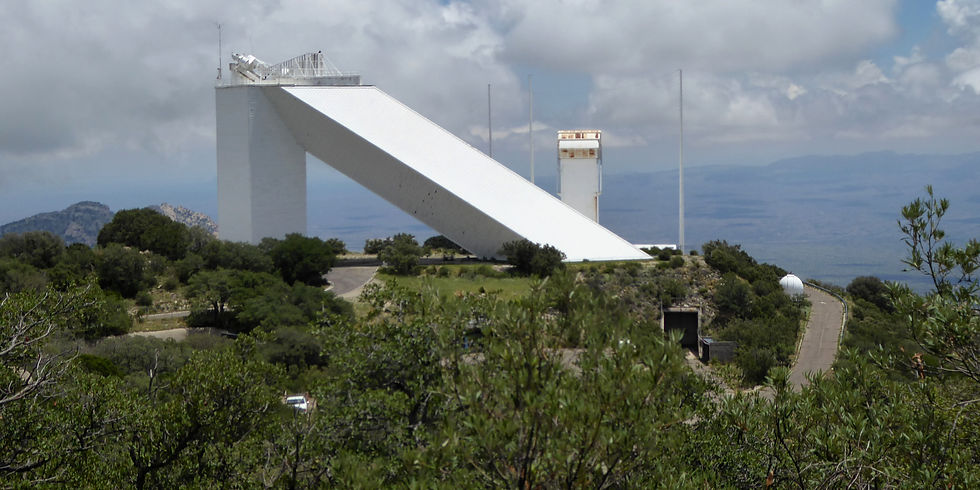
Kitt Peak National Observatory
AtoZ Places Bucket Location


Abandoned & Ghost Towns

Ancient Ruins

Caves

Desert

Forest

Historical

Hot Springs

Lakes & Rivers

National & State Parks

Peaks


Kitt Peak National Observatory rises to 6,877 feet in the Quinlan Mountains of the Tohono O'odham Nation southwest of Tucson — home to the largest collection of major optical research telescopes on Earth, with daytime tours of historic telescope domes, sweeping Sonoran Desert views, and nighttime stargazing programs that have drawn over 2 million visitors since 1964.
Historical

Exploring

Cell service may be limited — download maps before you go
Pets not permitted — leashed dogs allowed in parking areas and paved roads only
Water: Bring your own — limited availability
More Info
Plants Foraged
Nearby Locations
Saguaro National Park East

Titan II Missile Interpretive Site

Ironwood Forest National Monument
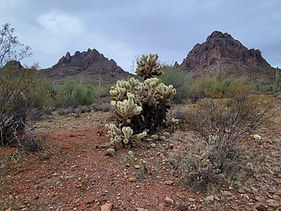
Kitt Peak National Observatory
Grandma Nadine had been to Kitt Peak before and said we should go. She was right.
The drive up is the first thing — and it delivers before you ever reach the summit. The road to the top of Kitt Peak passes through multiple ecological zones on the way up from the Sonoran Desert floor. We drove through the clouds on the way up — my kids thought it was one of the best things they'd ever done from a car window. Clouds at eye level, then above, then below. The valley spreading out beneath you as the road climbs. By the time you reach the summit the desert world you started in is thousands of feet below and the mountain has its own climate and its own forest of white telescope domes on every ridge.
The Mountain — Iolkam Du'ag
The summit is known to the Tohono O'odham as Iolkam Du'ag — "hairy mountain" or "mountain of manzanita shrubs" — a reference to the dense vegetation that covers its slopes. It holds spiritual significance as the home of I'itoi, the Elder Brother figure central to Tohono O'odham cosmology. Kitt Peak is the highest point in the Quinlan Mountains at 6,877 feet — located in the Schuk Toak District on the Tohono O'odham Nation, 56 miles southwest of Tucson.
When the site was selected in the late 1950s, the Tohono O'odham Tribal Council agreed to lease the land — but the relationship between the observatory and the Nation has been an ongoing conversation for decades, evolving toward more collaborative engagement with Indigenous sky knowledge alongside Western astronomical research. The gift shop at the visitor center includes baskets and jewelry crafted by Tohono O'odham artists — worth browsing.
How Kitt Peak Came to Be
Kitt Peak National Observatory was founded in 1958 — the first national optical observatory in the United States. The site for the proposed national observatory was constrained by practical considerations that limited the choice to somewhere within a narrow strip of southern Arizona and New Mexico. Kitt Peak won on the quality of its skies — the combination of altitude, distance from city lights, and the number of clear nights per year made it the best available site in the lower 48 states.
The observatory officially started welcoming public visitors in 1964. Since then, more than 2 million people have toured the site. It is operated by NOIRLab — the National Optical-Infrared Astronomy Research Laboratory — sponsored by the National Science Foundation.
The Telescopes
The first thing you notice on the summit is the sheer number of domes. There are 24 optical telescopes and 2 radio telescopes spread across Kitt Peak — the largest concentration of optical research telescopes on Earth in a single location. They range from compact educational instruments to the massive Mayall 4-Meter Telescope, whose dome rises 18 stories above the mountain and can be seen from miles away on the drive up.
What was fascinating on our visit was seeing the progression — the equipment and technology used in the past alongside what is in use now. The history of how astronomical instrumentation evolved over decades is visible in the different generations of telescope domes on the mountain. Each telescope represents a chapter in that story.
The McMath-Pierce Solar Telescope is the world's most striking solar telescope — a long angled structure that descends into the mountain rather than rising above it, used primarily during daylight hours to study the sun. It can see farther into the infrared than any other solar telescope.
The Mayall 4-Meter Telescope is the largest optical telescope on Kitt Peak — data from it led to the discovery of methane ice on Pluto. Standing inside the dome of a telescope this size recalibrates your sense of scale in an unexpected way.
Our Visit
We visited on July 18, 2018 — on the recommendation of Grandma Nadine, who had visited before and specifically said we should go. This visit was for her as much as for us. She passed away within months after this trip, and the memory of going somewhere she had been and enjoyed, and bringing my kids there on her recommendation, is part of what this entry is.
The drive through the clouds was the moment my kids talked about most. Standing at the summit looking out over the Sonoran Desert spreading thousands of feet below in every direction — the valley, the mountain ranges, the Tucson basin in the distance — is one of the better views in southern Arizona. The technology on the mountain — seeing the past and present of astronomical research side by side — was genuinely interesting. A lot of the technical detail goes over younger heads but the sense of scale and purpose comes through regardless of age.
Tours and Programs
Three daytime docent-led tours run daily covering the major telescopes — the McMath-Pierce Solar Telescope, the 2.1-meter telescope, and the 4-meter Mayall telescope. All tours are ticketed. The visitor center is free to enter.
The Nightly Observing Program is the premier experience for serious stargazers — arrive in the late afternoon to catch the sunset over the Sonoran Desert from 6,877 feet, then spend the evening with an astronomer using research-grade telescopes. Programs run 362 days a year. Book in advance — programs fill up quickly especially on weekends and in cooler months.
The VIP Tour is a comprehensive 4–5 hour experience covering the full summit — recommended for anyone with a serious interest in astronomy.
The Visitor Center
The visitor center includes exhibits on the observatory's history, the science conducted here, and the Tohono O'odham cultural context of the mountain. Snacks and beverages available — no restaurant or café on the mountain. Pack lunch and eat at the picnic tables with a view of the desert below. Gift shop includes Tohono O'odham basketry and jewelry alongside the usual astronomy merchandise.
The Drive — Worth It Alone
Even if the observatory itself didn't exist, the drive up AZ-386 from AZ-86 would be worth doing. The road climbs 4,000 feet in 12 miles from the desert floor to the summit — passing through Sonoran Desert scrub, oak woodland, and piñon pine. Wildlife sightings are common along the road — deer, javelinas, hawks, and occasionally rattlesnakes on warm mornings. The views from the summit road looking back over the Tohono O'odham Nation and the Sonoran Desert are extraordinary. Driving through the clouds — if the elevation and humidity align — is exactly as good as my kids said it was.
More Information (2026)
Visitor Center: free admission — no fee to visit the center and walk the summit grounds
Daytime telescope tours: ticketed — McMath-Pierce Solar Telescope, 2.1-meter telescope, 4-meter Mayall telescope — book in advance at kpno.noirlab.edu
Nightly Observing Program: ticketed — book well in advance, especially weekends — 362 days/year
VIP Tour: 4–5 hours, comprehensive summit experience — reservation required
Visitor Center gift shop: astronomy merchandise and Tohono O'odham basketry and jewelry
Picnic tables available at the summit with desert views
No restaurant or café on the mountain — bring food and water
Road to summit: paved, 12 miles, steep grades and switchbacks — accessible to all vehicles but allow extra time for the climb
Contact
Kitt Peak National Observatory
Highway 86 to AZ-386, Tohono O'odham Nation (520) 318-8726
Hours
Visitor Center: 9:00 AM–4:00 PM daily
Closed Thanksgiving, Christmas, New Year's Day
Nightly Observing Programs: 362 days/year — check schedule at kpno.noirlab.edu
#KittPeak #KittPeakObservatory #NOIRLab #TohononOodham #ArizonaAstronomy #Stargazing #Telescopes #SonoranDesert #PimaCounty #AZPlaces #ArizonaScience #NightSky #DarkSky #Astronomy #SouthernArizona
Arizona
XC52+VJ Haivana Nakya

Pima County
31°57'39.0"N 111°35'53.7"W
Elevation: 6,877 feet
Directions
From Tucson, AZ: Head west on AZ-86 (Ajo Way) approximately 44 miles toward Sells. Watch for the signed junction with AZ-386 on the right (north). Turn right onto AZ-386 and follow the winding mountain road approximately 12 miles to the summit and observatory. The road climbs 4,000 feet in 12 miles — scenic, paved, and accessible to all vehicles but with steep grades and switchbacks.


Best Seasons & Temperatures
Fall through spring is the ideal season — mild summit temperatures and the clearest skies of the year. Winter nights are cold at 6,877 feet — dress in layers for evening programs. Summer monsoon season (July–September) brings afternoon clouds and thunderstorms that can interrupt telescope viewing — daytime tours are less affected but evening programs may be cancelled due to clouds. Our July visit was during monsoon season — cloud encounters on the drive up were part of the experience. The road to the summit is open year-round weather permitting — occasional winter closures for ice and snow. Check current road conditions before visiting.
Kitt Peak National Observatory telescopes Tohono O'odham Nation Arizona Sonoran Desert
July 18, 2018