Black Canyon (FR 300)
AtoZ Places Bucket Location


Abandoned & Ghost Towns

Ancient Ruins

Caves

Desert

Forest

Historical

Hot Springs

Lakes & Rivers

National & State Parks

Peaks

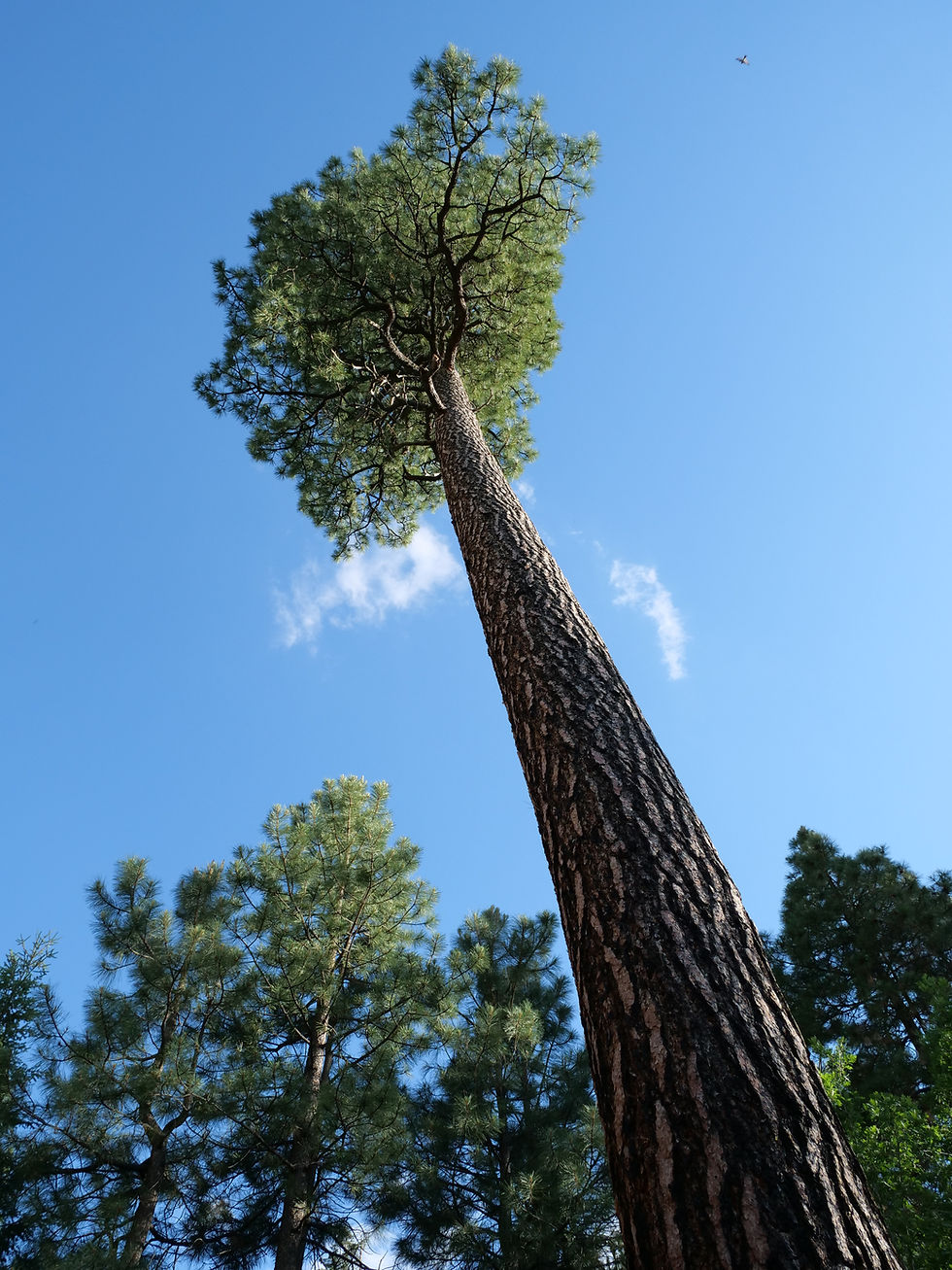
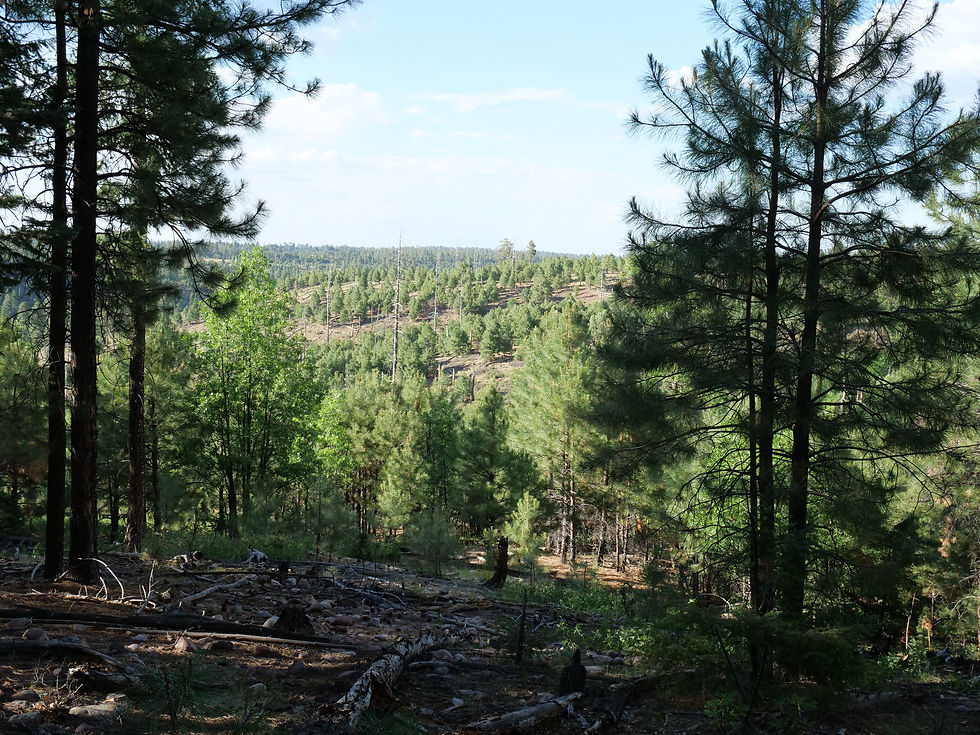
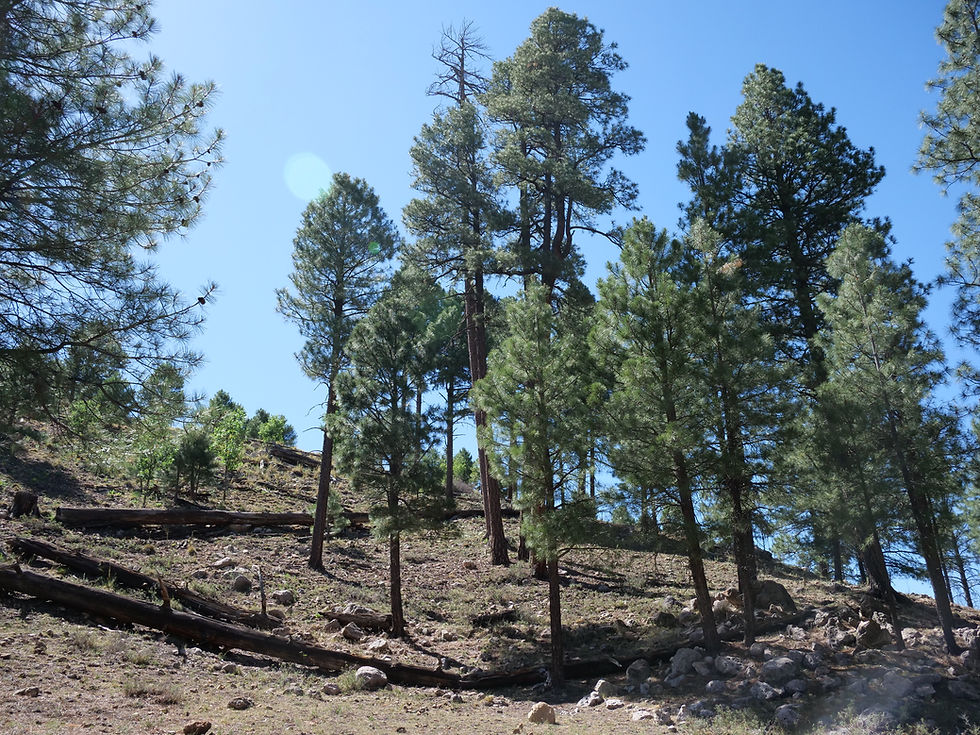
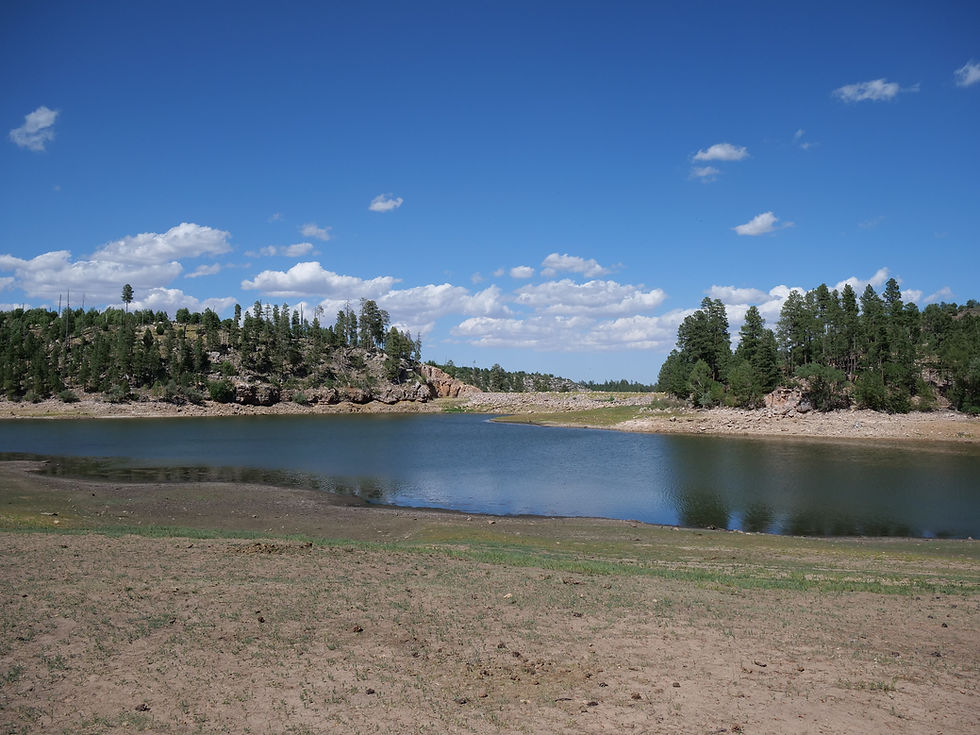
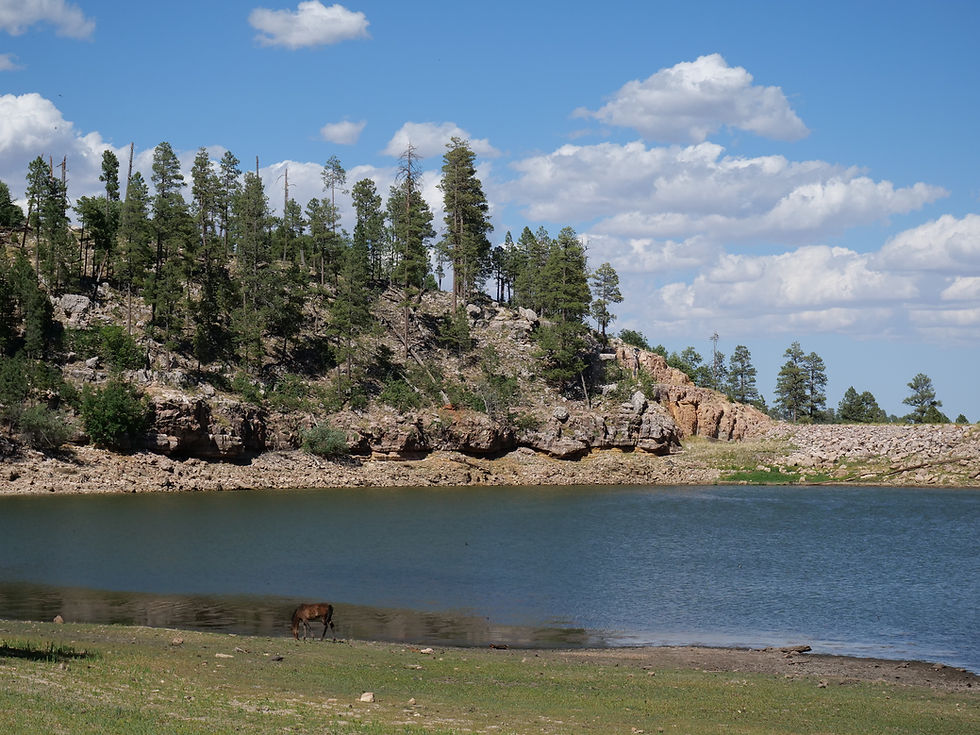
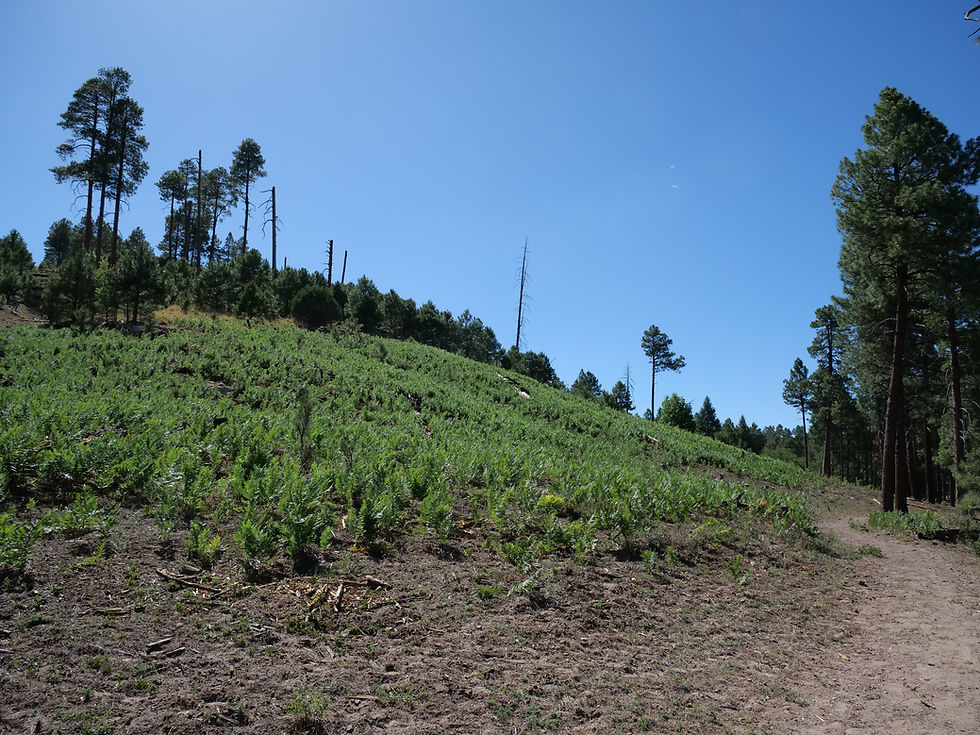
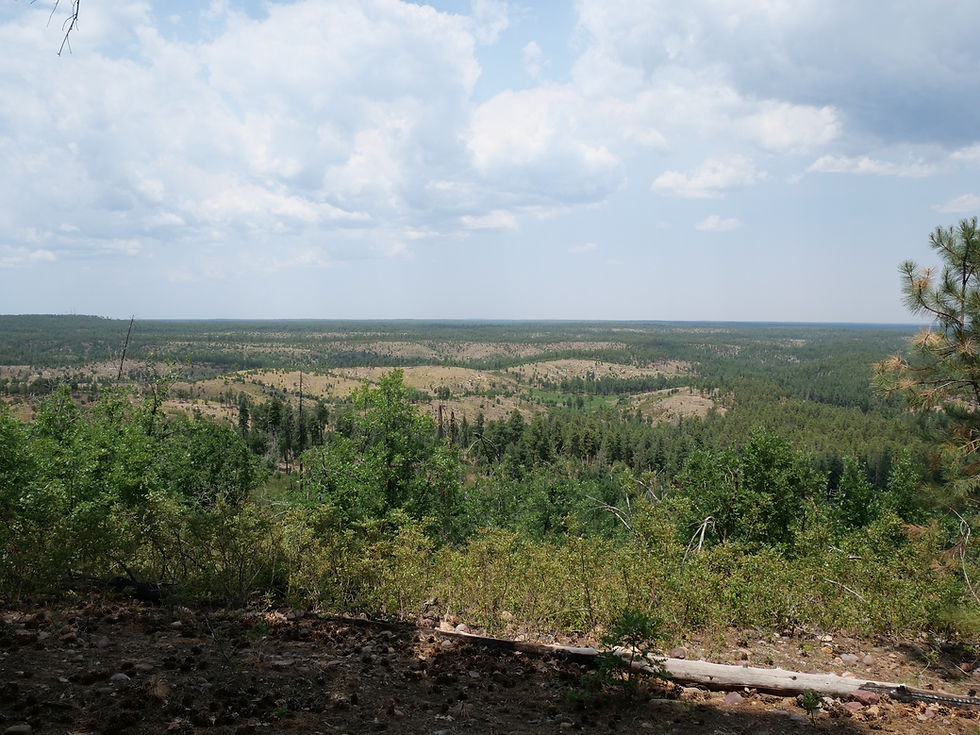
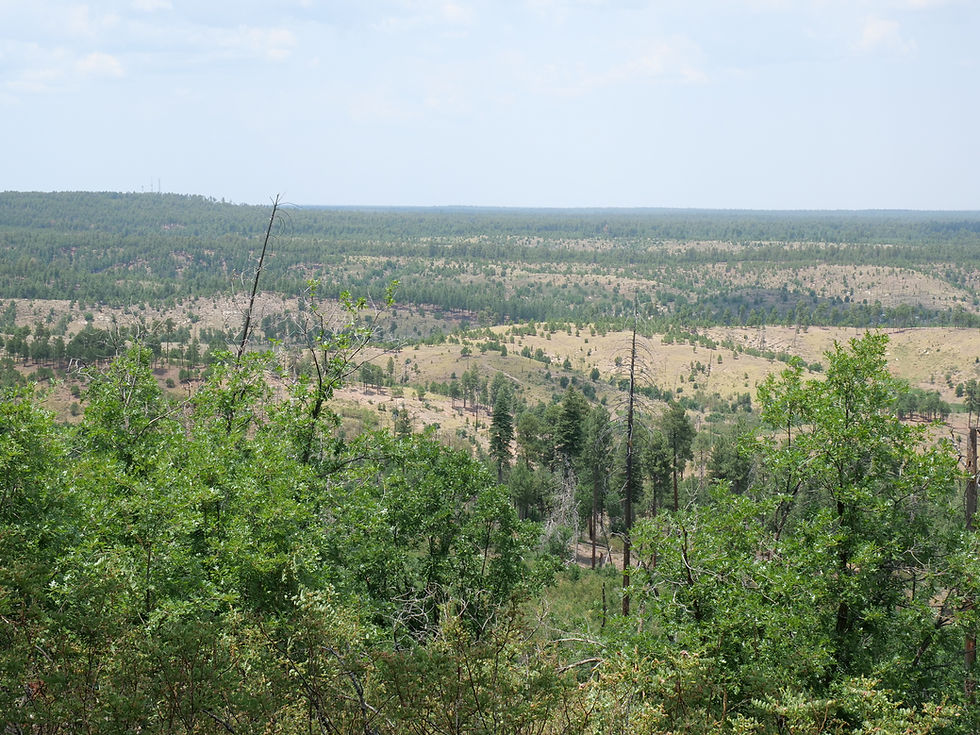
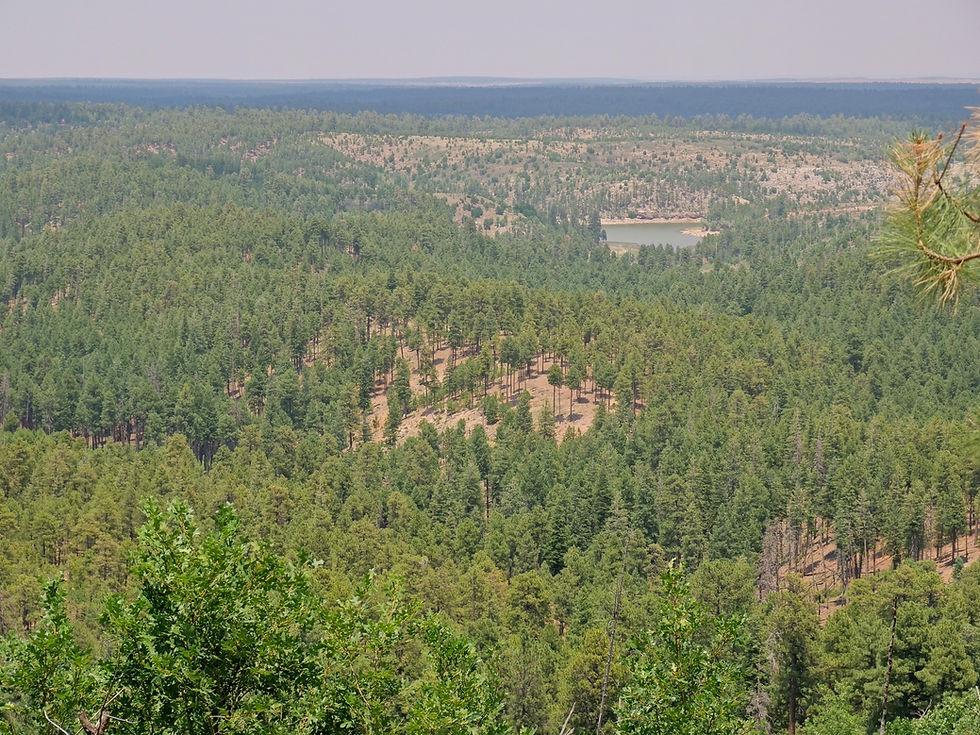

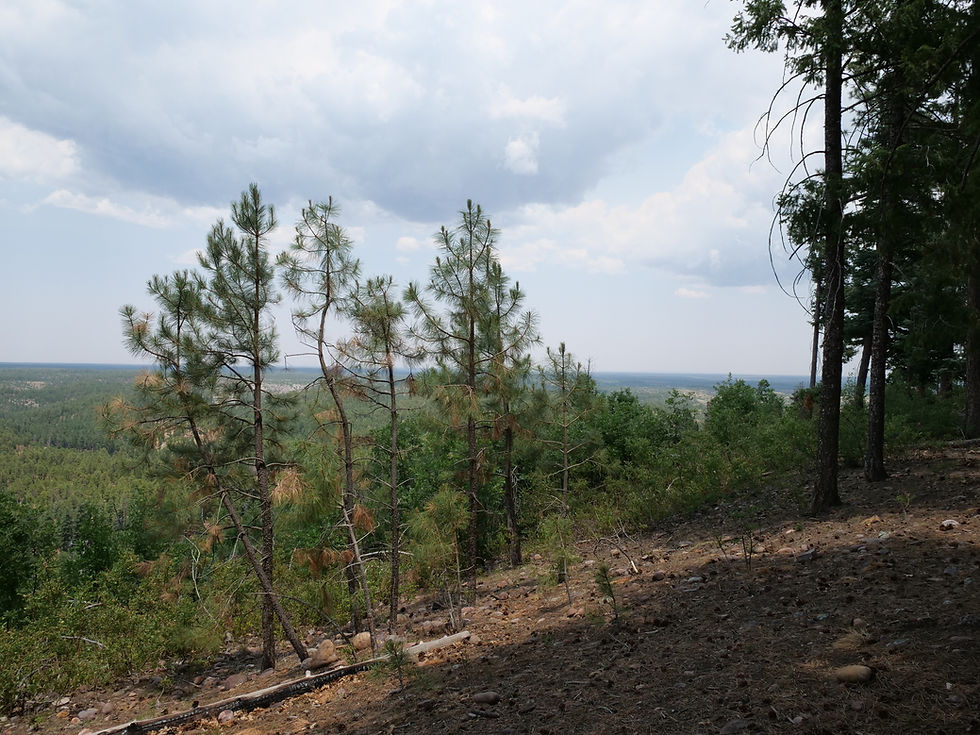


Black Canyon Rim Road (FR 300) in the Apache-Sitgreaves National Forest is a ponderosa pine forest corridor at 7,060 feet on the Mogollon Rim — home to wild horses at Black Canyon Lake, the historic Stott, Scott and Wilson gravesite from the Pleasant Valley War, Gentry Lookout Tower views across the rim, dispersed camping, and the General Crook Trail through one of the quietest and most rewarding corners of northeastern Arizona.
Forest

Wildlife

Camping

OHV

Hiking

Exploring

Fishing

Bear Country: Store all food, scented items, and trash in bear boxes where provided. At dispersed sites without bear boxes, store food in a locked vehicle or hung from a tree away from camp.

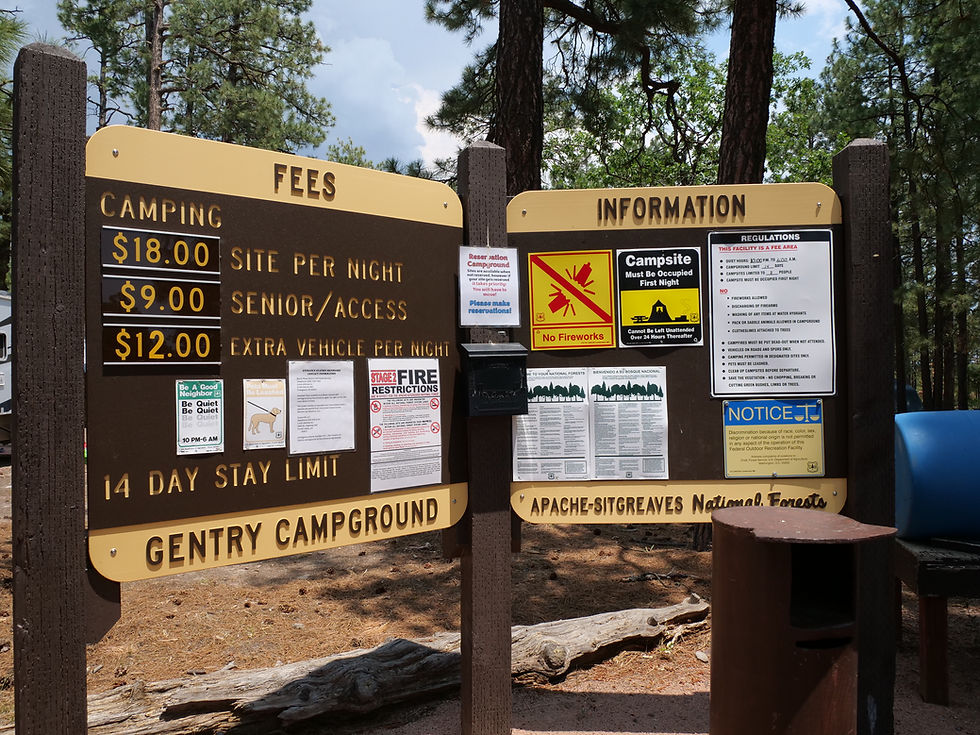
Camping: Dispersed sites available, with a developed campground nearby.

No campfires during fire restrictions — before visiting check with the Ranger District or BLM.

Stay Limit: Maximum of 14 consecutive days.
Water: No potable water; pack your own supply.
More Info
Plants Foraged
Dandelion

Manzanita

Nearby Locations
Black Canyon Lake

Black Canyon (FR 300)
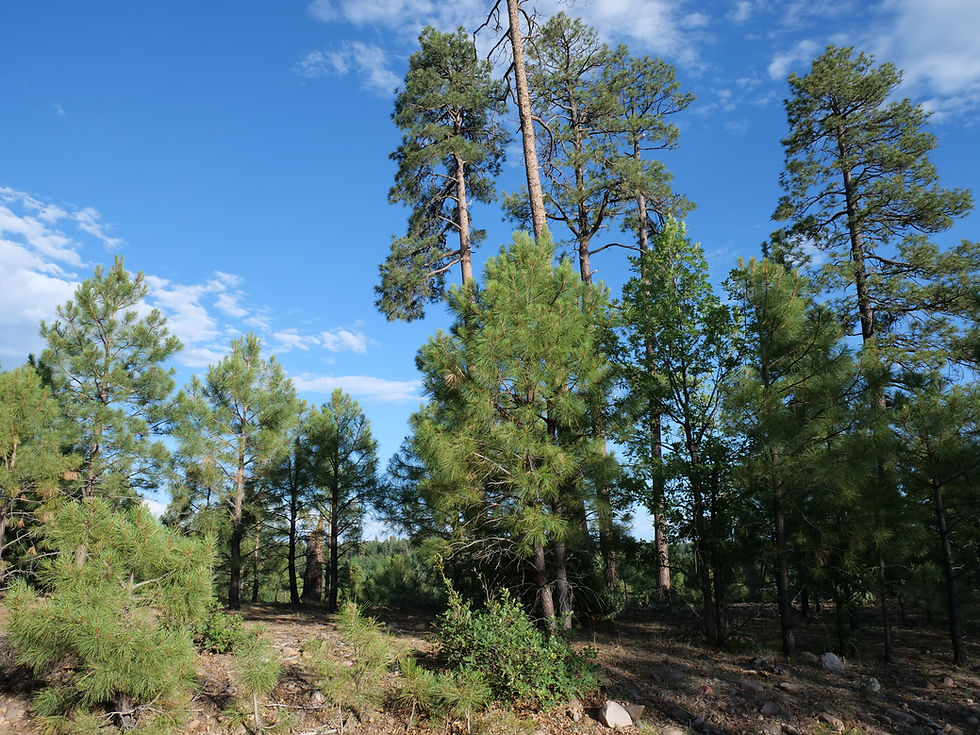
BForest Road 300 runs along the Mogollon Rim in the Apache-Sitgreaves National Forest — a ponderosa pine corridor at 7,060 feet in Navajo County where the forest is dense, the roads are quiet, and the history embedded in the landscape runs from territorial-era range wars to the fire lookout towers that watched over the rim through the 20th century. Black Canyon Lake sits three miles northeast. Willow Springs Lake is twelve miles east. The General Crook Trail passes through. And the horses come down to the water.
We came here July 8–13, 2025 for the AZ Places hosted camping launch — five nights in the forest with Luca, Matthew, Alexis, Matt, and six friends as our first hosted camping group. The trip served as the real-world test of the AZ Places camp kitchen, menu, and hosting model. It delivered everything we needed to know and then some.
Camp — The Launch Trip
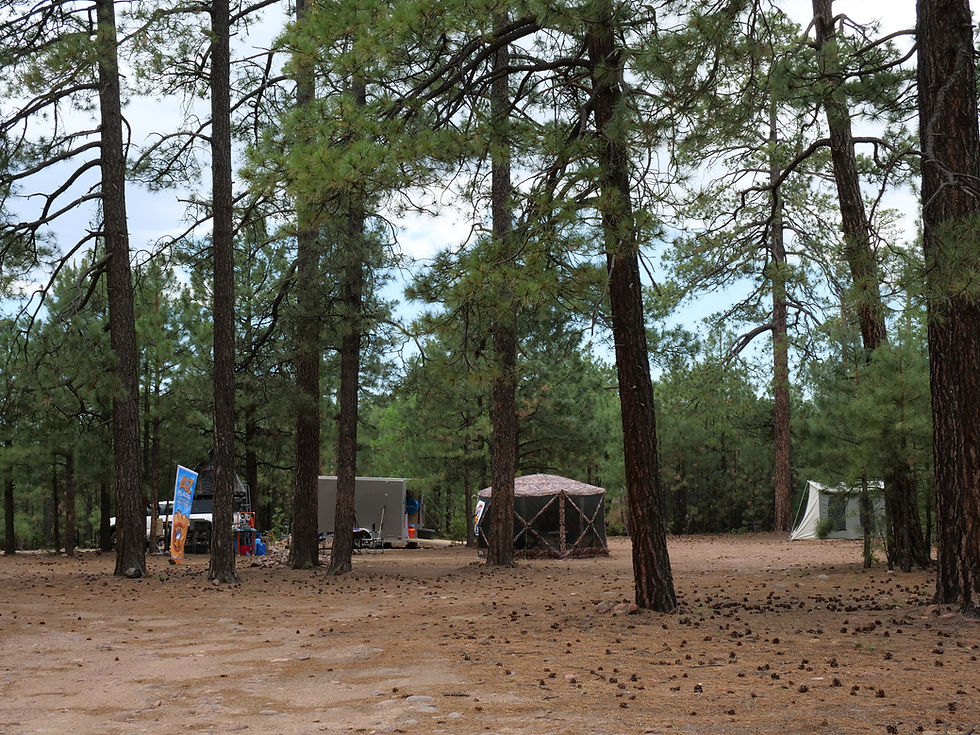
Five nights dispersed camping on FR 300 with a group of eleven. The main tent served as the communal gathering space — meals together three times a day, games in the afternoon, music from the AZ Places music box instruments in the evenings. No fires were permitted during our stay — fire restrictions were in effect across the Apache-Sitgreaves — which meant the camp kitchen carried all the cooking weight. We tested the full menu across five days: breakfast, lunch, and dinner, with the dishwashing station running after every meal. The camp kitchen performed. The menu worked. The hosting model proved out.
The camp itself sat in a ponderosa forest clearing with fresh-cut wood stacked at the edge — someone had come through before our arrival and cut down trees right at the perimeter of the site, leaving chopped sections of pine that defined one edge of the camp. Luca built a bed frame from the available wood — a platform with a wall on one side and a mattress of pine needles, the kind of camp construction that makes a temporary site feel more permanent.
The skunk found the pine needle bed on one of the nights. Luca was in it when the skunk arrived to investigate. The skunk was unbothered. Luca was very still. The situation resolved without incident.
Wildlife in camp across the five nights: deer moving through the forest edge at dusk, the skunk that made Luca's acquaintance, and the sounds of elk in the forest after dark — heard clearly on the night hike to the gravesite.
Black Canyon Lake — Wild Horses
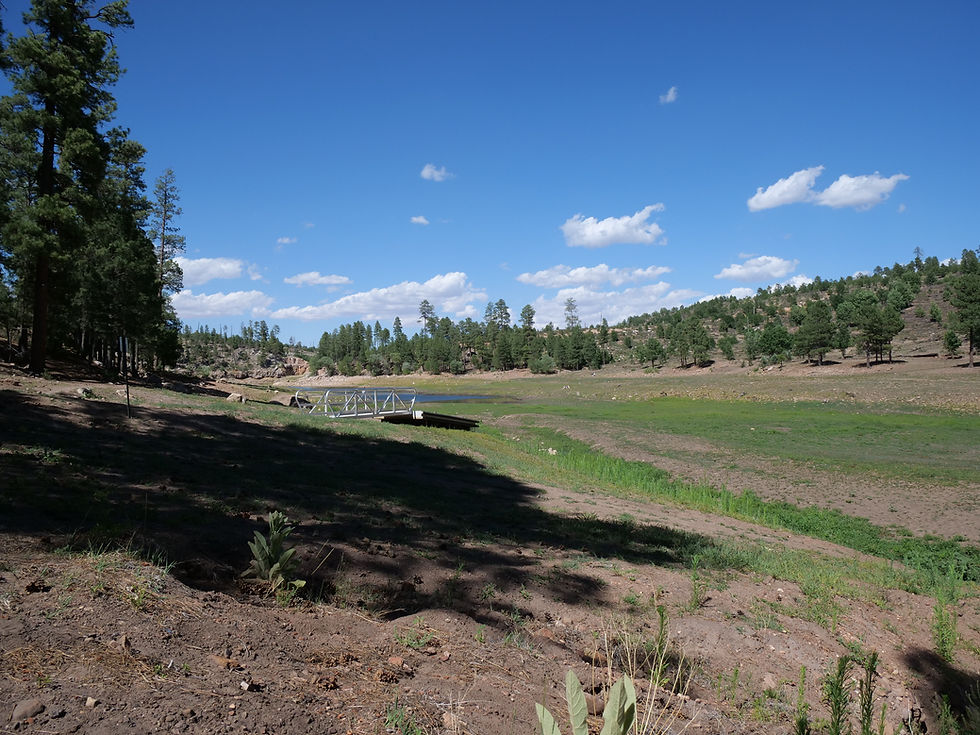
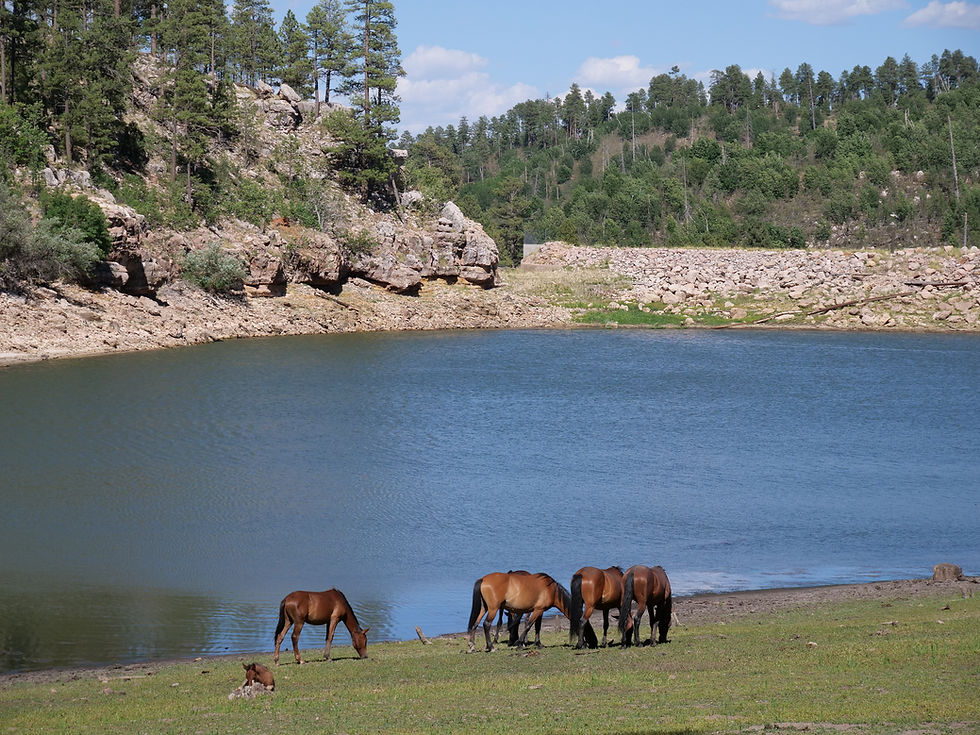
Three miles northeast of camp on FR 86, Black Canyon Lake sits in the pines — a small reservoir regularly stocked with rainbow trout and surrounded by the ponderosa forest of the Mogollon Rim. On our visit the lake was the best wildlife viewing of the trip.
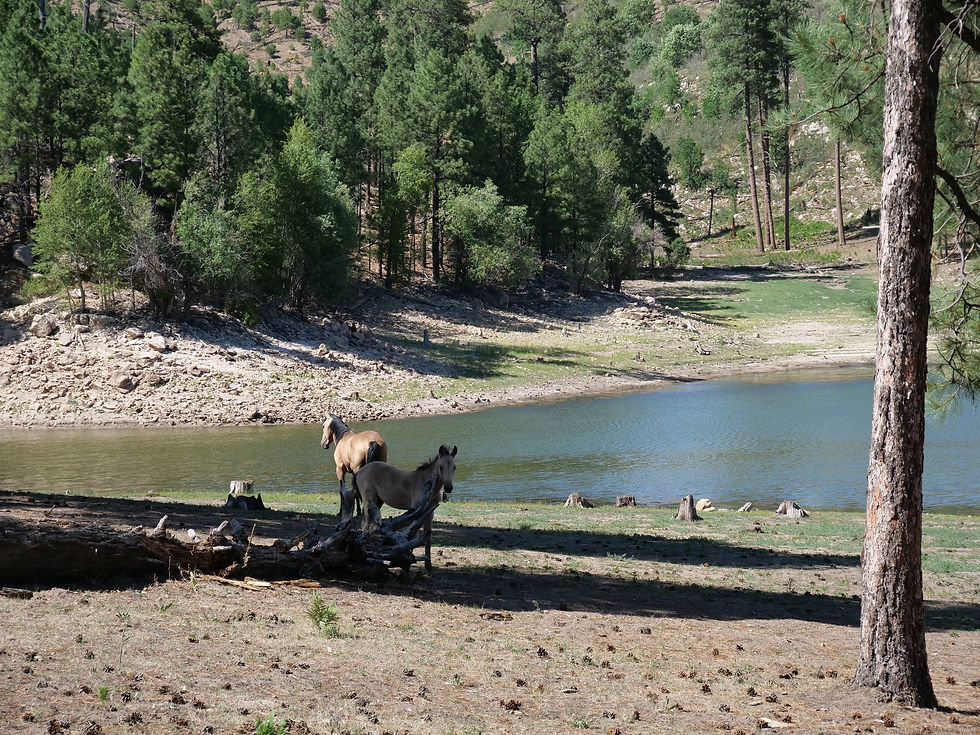
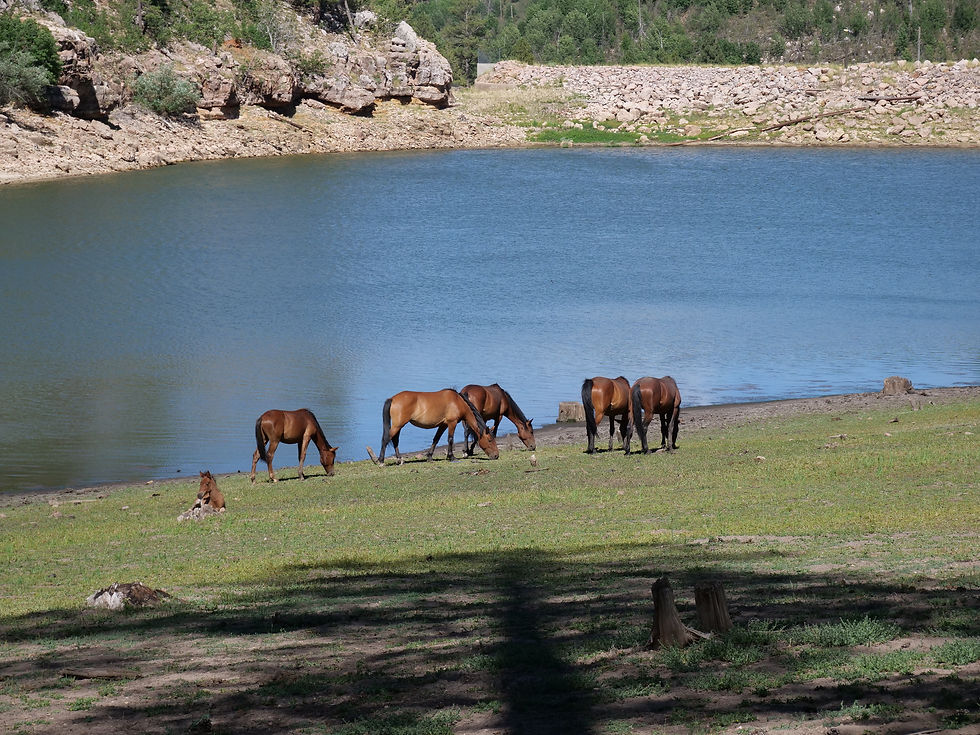
On the approach to the lake we spotted the wild horses before we reached the water — a group moving toward the lake for their morning drink. We stopped and watched them come in. Several additional groups were visible along the far shorelines — horses spread across the lake edge in the morning light, the forest behind them, the water in front. Young horses rolling in the dirt at the lake edge — one of the more joyful wildlife moments of the trip, the foals working the dry ground with an enthusiasm that made the whole group stop and watch. Two horses mated during our time at the lake. The full cycle of the herd in one morning visit.
Luca spotted an eagle above the dam — the bird working the air over the water before moving north along the tree line. People fishing along the accessible bank. The lake in July at 7,200 feet is exactly the Mogollon Rim experience the elevation and the forest promise.
The Geocache and the Overgrown Road
Some of the group hiked up FR 300 from camp — a walk that turned into an exploration when they found a geocache along the road and, beyond it, an old overgrown service road pushing back into the forest. They took it. The kind of discovery that happens when you walk slowly on a forest road and pay attention to what the trees are hiding. The service road went far enough to be interesting before they turned back.
The Night Hike — Stott, Scott and Wilson Gravesite
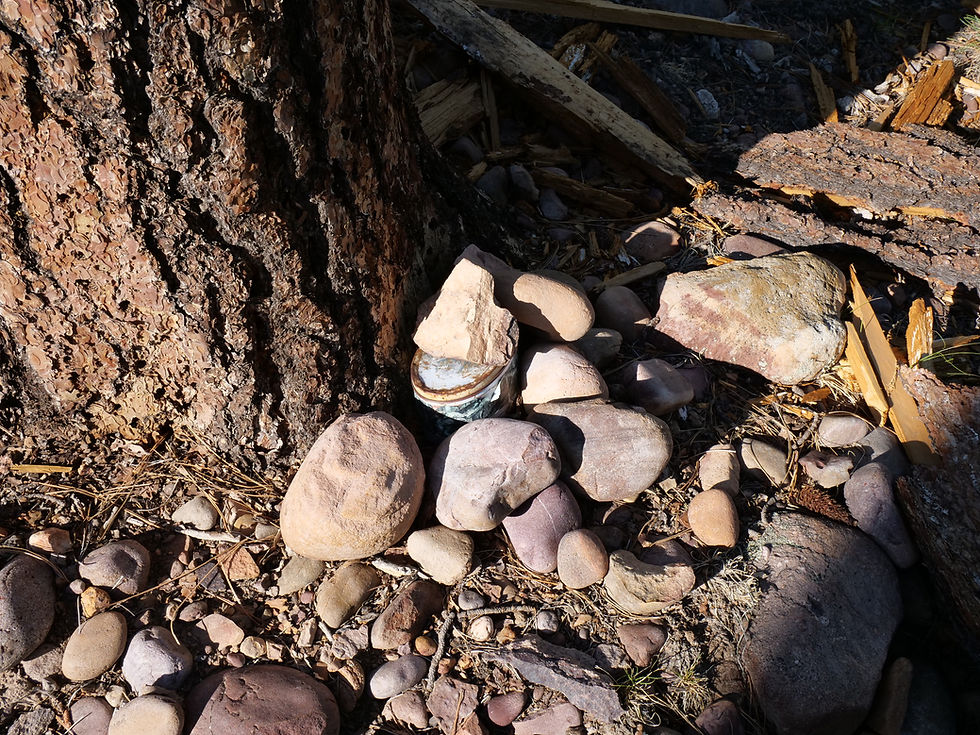
A short walk from camp after dark to the gravesite of Stott, Scott and Wilson — three young men who were lynched here in August 1887 during the Pleasant Valley War, one of the bloodiest range feuds in Arizona territorial history. The war between the Graham and Tewksbury families turned the Pleasant Valley country east of Payson into killing ground across the late 1880s, and the deaths of Stott, Scott and Wilson — accused of horse theft and lynched without trial — were among the more documented incidents of the period.
We found the site on foot at night. Luca narrated the written story at the location — the historical marker text read aloud in the dark forest beside the graves — and we filmed it. The combination of the location, the night, and Luca's narration made the video one of the better pieces of content from the whole trip.
On the hike we encountered a brown toad on the trail and could hear elk moving in the forest beyond the tree line. The kind of night hike that delivers more than the destination.
Gentry Lookout Tower
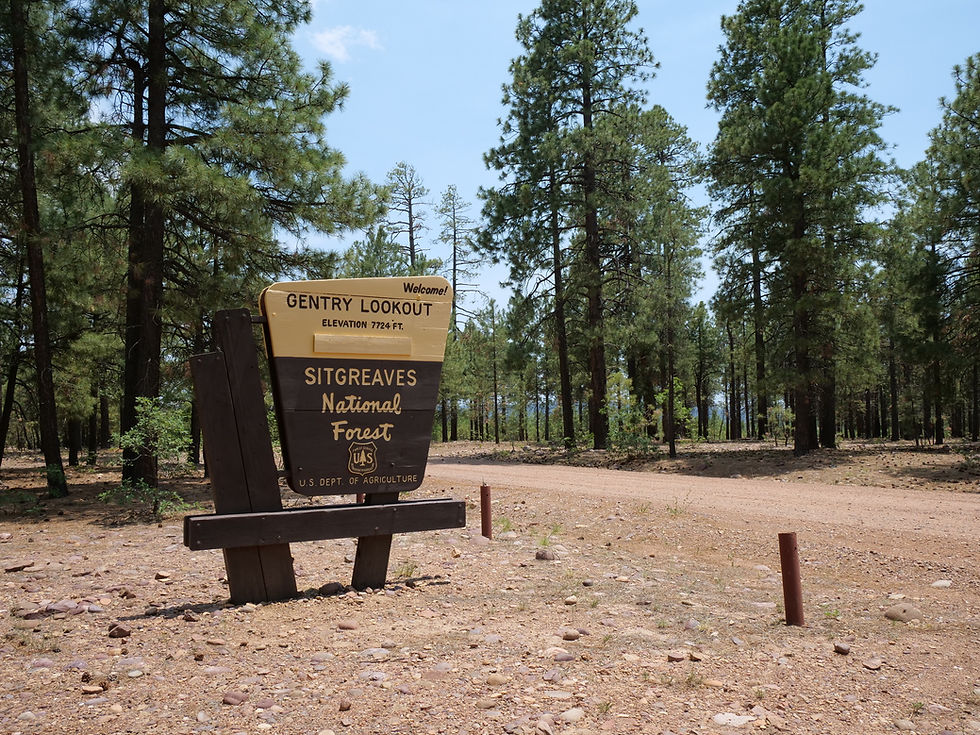
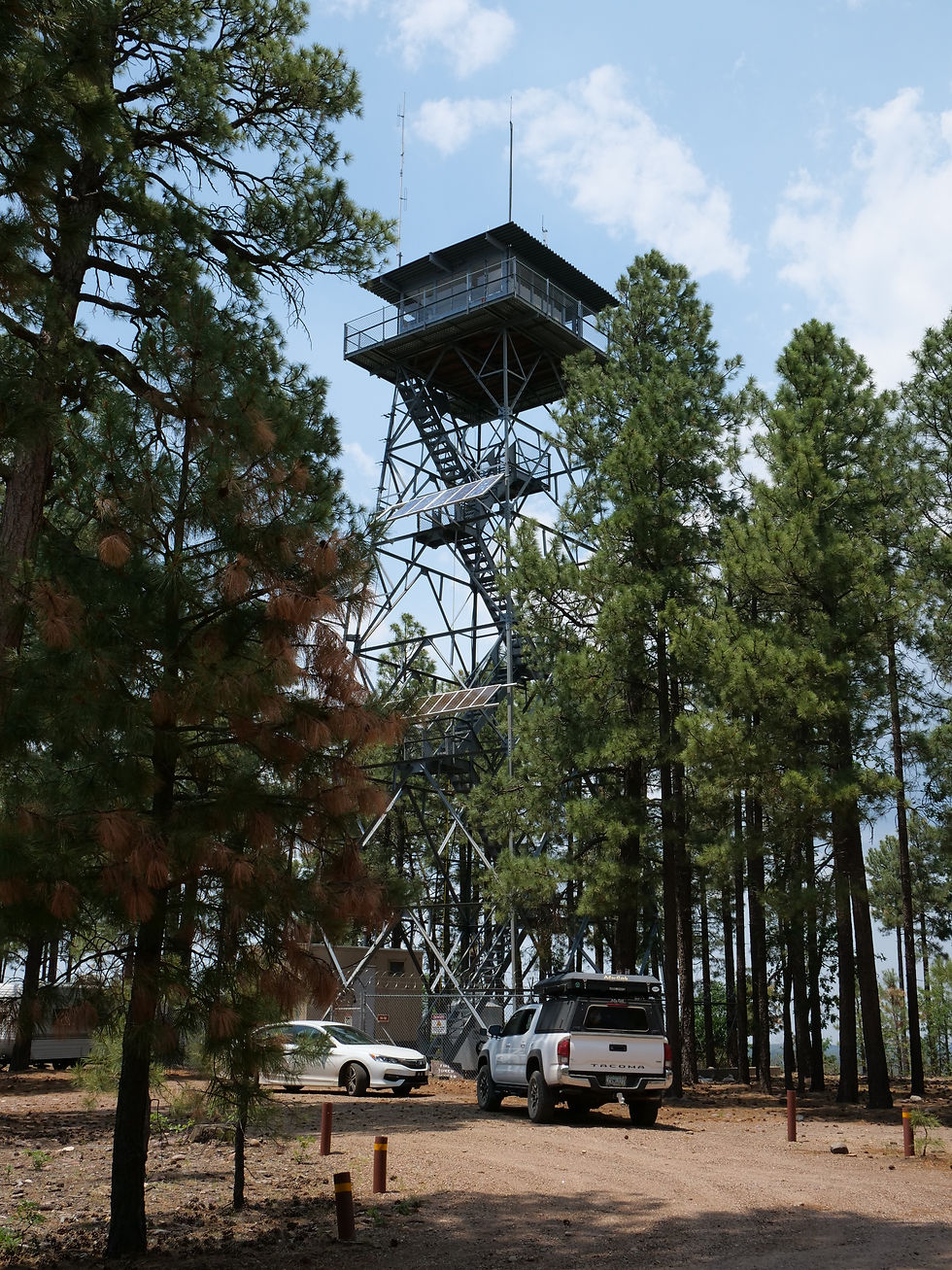
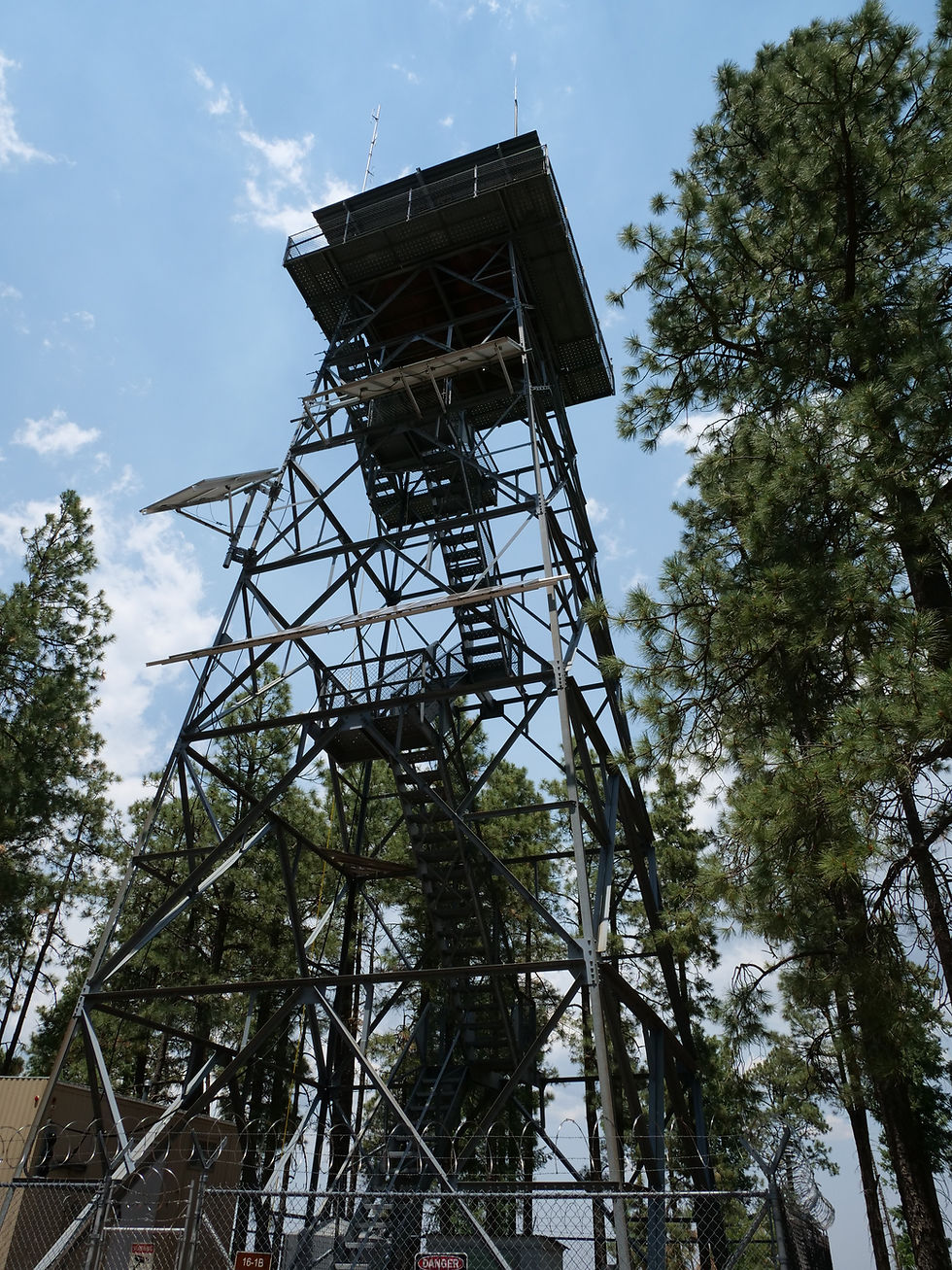
A day trip east from camp to Gentry Lookout Tower — an active fire lookout on the Mogollon Rim with some of the finest views in the Apache-Sitgreaves. The tower itself is not open to the public but the area below the tower delivers the view without the climb.
From below the tower we could see across the rim — Black Canyon Lake in the forest below, the FR 300 corridor visible in the distance, the edge of a town on the horizon, and the layered topography of the Mogollon Rim country spreading out. One of the better rim viewpoints accessible without a significant hike.
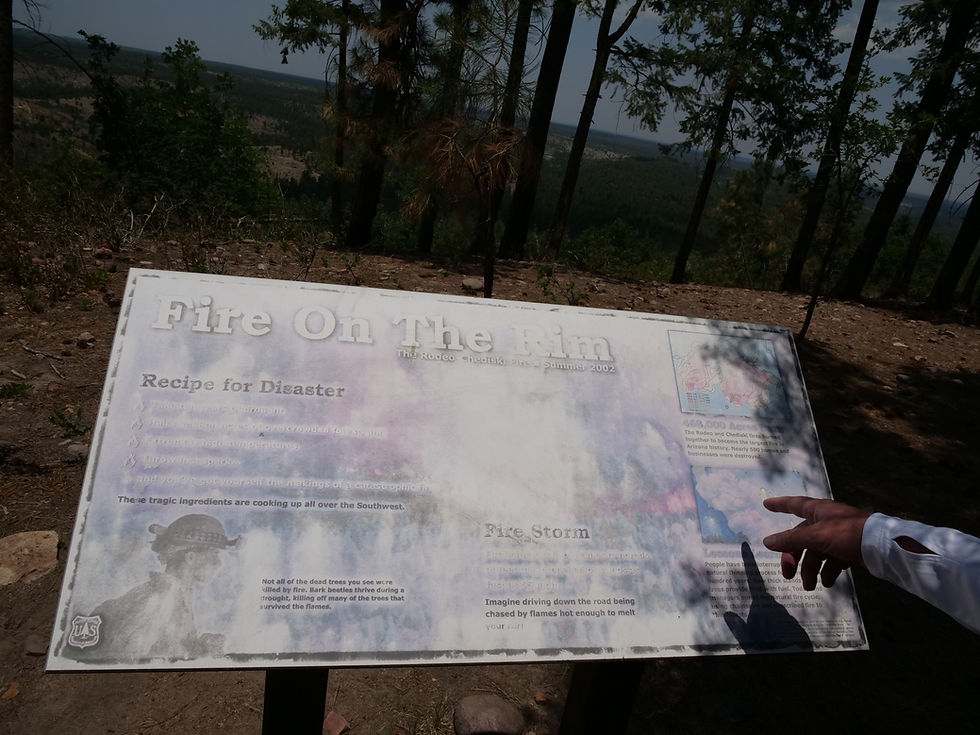
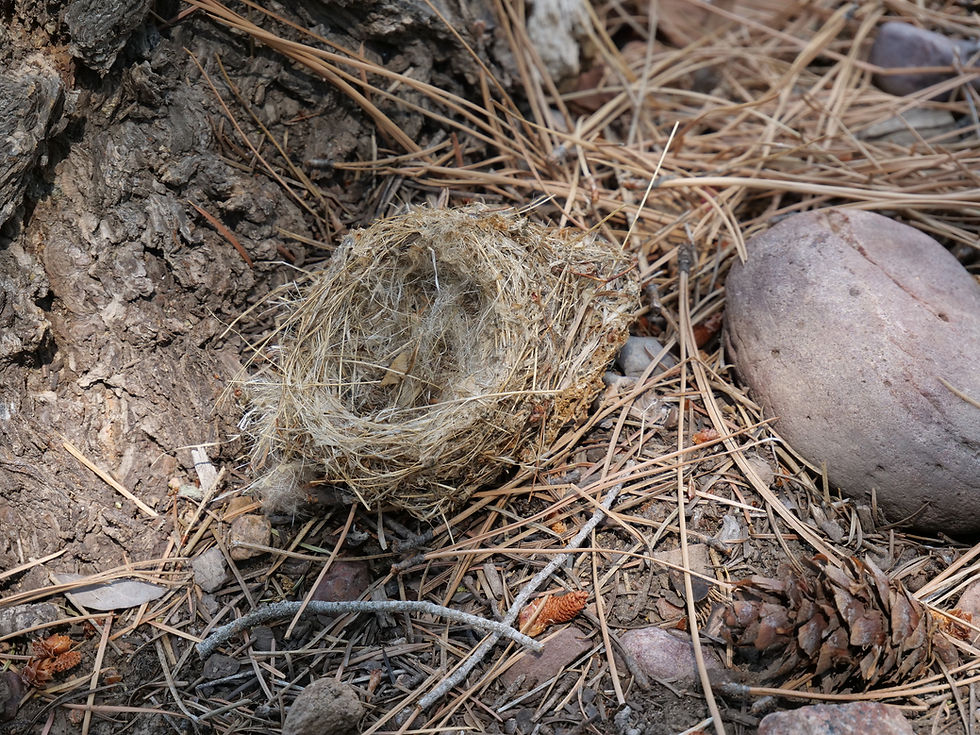
At the lookout site there is information about the history of rim fires — the Rodeo-Chediski Fire and the larger context of fire management in the Apache-Sitgreaves. We found a downed nest under a tree near the tower — fallen but intact, the construction still readable in detail.
Twin Lakes Road FR 162 — South to the Reservation Boundary
From Gentry Lookout we took FR 162 south through the forest — a road that runs toward the White Mountain Apache Reservation boundary. We followed it to the end where the public land stops at the reservation line.
On the return leg we found a pond off the road — worth the stop. Plenty of Manzanita in the surrounding terrain. Our lead rider on a motorcycle spotted a young bear cub near the road — the rest of the group never saw it but the motorcycle puts you at a different angle to the forest than a truck does, and bear cubs in the Mogollon Rim country in July are not unexpected.
A storm built on the horizon during the FR 162 return and we pressed back toward camp ahead of it. We made it. The rain arrived shortly after — a monsoon build that cooled the camp and settled the dust.
#BlackCanyonRim #FR300 #MogollonRim #ApacheSitgreaves #WildHorses #BlackCanyonLake #PleasantValleyWar #GentryLookout #AZPlaces #NavajoCo #DispersedCamping #PonderosaPine #ArizonaCamping #MogollonRimCamping #ForestCamping
Campground

Dispersed Camping

Arizona
866W+V23 Forest Lakes, Arizona, USA

Navajo County
34°18'43.7"N 110°45'17.8"W
Elevation: 7,060 feet
Directions:
From Phoenix, AZ:
Take AZ-87 North through Payson then AZ-260 East approximately 30 miles past Payson. Turn north onto FR 300 (Black Canyon Rim Road) — well-signed from AZ-260. Follow FR 300 north into the forest — dispersed camping spots appear along the road on both sides. Black Canyon Rim Campground and the FR 86 turnoff to Black Canyon Lake are both accessible from FR 300. High clearance recommended for dispersed sites off the main road.
From Show Low, AZ:
Take AZ-260 West approximately 25 miles. Turn north onto FR 300. Follow directions above.


Best Seasons & Temperatures
Late spring through early fall is the primary season at 7,060 feet — May through October when FR 300 is accessible and the forest is at its best. July as we experienced delivers the full monsoon season character — afternoon storm builds, overnight rain, and the forest at its greenest and most active. Fire restrictions are common in June and early July before the monsoon moisture arrives. Summer temperatures at this elevation are consistently comfortable — daytime highs in the 70s to low 80s, cool nights. Winter brings snow to FR 300 and the road may be impassable December through March — verify conditions with the Lakeside Ranger District before visiting outside the May through October window.
Black Canyon Rim FS RD 300, Apache-Sitgreaves National Forest, Arizona
July 8-13 2025