
Casa Grande Ruins National Monument
AtoZ Places Bucket Location


Abandoned & Ghost Towns

Ancient Ruins

Caves

Desert

Forest

Historical

Hot Springs

Lakes & Rivers

National & State Parks

Peaks


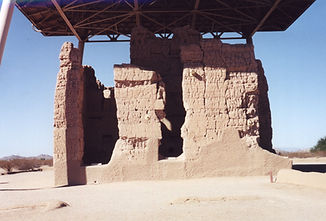

Casa Grande Ruins National Monument in Coolidge, Arizona preserves the largest known prehistoric structure in North America — a four-story Hohokam adobe Great House built around 1350 CE, protected by a massive steel canopy, designated as America's first archaeological reserve in 1892, and surrounded by the remnants of a sophisticated farming civilization that irrigated the Sonoran Desert for over a thousand years.
National & State Parks
Ancient Ruins

Exploring
America the Beautiful pass accepted for day use
No camping — day use only

Pets not permitted — leashed dogs allowed in parking areas and paved roads only
Water: Available at this site.
More Info
Plants Foraged
Nearby Locations
Saguaro National Park East

Ironwood Forest National Monument
Picacho Peak State Park

Casa Grande Ruins National Monument
Standing in the flat agricultural plain between the Gila and Santa Cruz Rivers in central Arizona, Casa Grande does not look like what you expect from a distance. The massive steel canopy above it — built to protect the structure from sun and rain — is visible first, rising above the desert scrub like an industrial shelter in the middle of nowhere. Under it, the Great House itself emerges: a four-story block of caliche adobe, walls still standing after more than 650 years, the largest prehistoric earthen structure ever built in North America.
The Hohokam — Desert Farmers of the Sonoran
The people who built Casa Grande are known as the Hohokam — a name meaning "those who have gone" in the O'odham language of their descendants. Archaeological evidence places Hohokam presence in the Sonoran Desert as early as 5,500 BCE — beginning as hunter-gatherers and transitioning over millennia into sophisticated agricultural farmers as the desert grew hotter and drier and wild food became less reliable.
At the height of their civilization, the Hohokam established trade routes across the Southwest and into Mexico, created distinctive red-on-brown pottery and shell jewelry, operated ball courts, and dug hundreds of miles of wide-scale irrigation canals to farm the desert river valleys. The canal system of the Hohokam is one of the most extensive prehistoric irrigation networks in North America — the canals they built in the Phoenix Basin alone stretched over 500 miles and irrigated more than 110,000 acres. The canals that supply modern Phoenix still follow the same corridors the Hohokam established a thousand years before statehood.
The Great House — What It Is
The Great House was built around 1350 CE from caliche — a naturally occurring calcium carbonate hardened by groundwater that solidifies into a concrete-like material when dried. The Hohokam quarried wet caliche from the ground, packed it into forms, and allowed it to harden into massive walls. The four-story structure has walls up to four feet thick at the base, tapering as they rise. Some walls still stand over 35 feet tall.
The building's alignment is deliberate and precise — the four walls face the points of the compass exactly, and several openings and windows are aligned to the positions of the sun and moon at specific times of year. The summer solstice sunrise aligns with a circular hole in the upper west wall. The winter solstice sunset aligns with another. The spring and fall equinoxes produce alignments of their own. Whether the Great House functioned as an astronomical observatory, a ceremonial center, or an administrative building — or all three — remains a subject of ongoing research.
The Great House is not the whole site. A walled compound surrounded it, with several smaller structures inside. The village associated with the compound and its associated population once stretched considerably beyond the current monument boundary. Only a portion of the full site has been excavated.
America's First Archaeological Reserve
By the late 1800s the ruins were well known and heavily damaged — souvenir hunters had carried away pottery, adobe, and architectural elements. The damage was severe enough that preservationists pushed for federal protection. On June 22, 1892, President Benjamin Harrison designated Casa Grande Ruins as the nation's first archaeological reserve — the first time the United States government acted to protect a prehistoric site for cultural and scientific reasons. It became a National Monument under President Woodrow Wilson in 1918.
The first roof built to protect the structure was corrugated iron supported by redwood timbers. The current steel canopy — a signature visual element of the site — was constructed in the 1930s by the Civilian Conservation Corps and is now itself a historically significant structure. The CCC also built the visitor center and site infrastructure.
Padre Eusebio Francisco Kino, the Jesuit missionary who founded missions across northern Mexico and southern Arizona, was the first European to document the ruins in 1694 — naming them "Casa Grande," Spanish for Great House. The name has remained ever since.
The Visitor Center
The visitor center is the right place to start — museum exhibits with pottery, tools, shell jewelry, and information on Hohokam trade networks provide context for everything you'll see on the loop trail. A short introductory film runs in the accessible theater. Rangers offer guided tours at scheduled times throughout the day — the ranger tours add significantly to the experience and are worth timing your visit around.
Outside the visitor center, a shaded picnic area is occupied by an active population of ground squirrels. Desert plants including large saguaros surround the grounds.
The Trail
A 0.2-mile paved accessible loop trail circles the Great House, allowing close views of the structure from multiple angles and reading the interpretive signs that explain the construction, function, and cultural context of the building. Visitors cannot enter the Great House itself. The loop also passes remnants of the compound wall and smaller structures within the complex.
Our Visit
We visited in November 2000 — one of the earlier entries on the bucket list, a trip that predates the cameras and the blog. Glen and I went with a couple of friends on what turned out to be a perfect November day for it — mild temperatures, quiet grounds, and the low winter sun lighting the caliche walls.
We started in the visitor center, browsed the museum exhibits, and watched the orientation film before heading outside to the self-guided tour. The loop around the Great House is short — a walk that follows wayside signs explaining the structure, the compound, and the Hohokam culture that built it. The scale of the building is what stays with you. Standing next to four-story walls made entirely of desert soil, still standing after more than 650 years, puts the engineering accomplishment in a different category than reading about it.
The Great House reminded me of ruins I had seen in the Yuma area — the same Hohokam culture, the same caliche construction, the same flat desert setting. The Hohokam were not isolated here — they were part of a network of settlements connected by canals, trade routes, and shared architectural traditions that stretched across the entire Sonoran Desert.
A short visit but a memorable one — and a reminder that some of the most significant archaeological sites in North America are sitting quietly in the middle of Arizona's agricultural flatlands, easy to drive past and easy to underestimate.
More Information (2026)
Entrance fee: $15/adult (16+) — valid 7 days
Visitor center: 9 AM–5 PM daily — exhibits, theater, gift shop, restrooms
Ranger-led tours: check current schedule at nps.gov/cagr
Loop trail: 0.2 miles paved, wheelchair accessible, no entry into Great House
Picnic area available — shaded, ground squirrel residents included at no extra charge
No climbing on or touching the ruins
Photography permitted throughout — no flash inside the visitor center exhibits
Closed Thanksgiving, Christmas, and New Year's Day
Ranger District
National Park Service — Casa Grande Ruins National Monument
1100 W. Ruins Drive, Coolidge, AZ 85128
(520) 723-3172
#CasaGrandeRuins #HohokamCulture #ArizonaHistory #AncientRuins #NationalMonument #Coolidge #ArizonaArchaeology #AncestralSonoranDesert #AZPlaces #PinalCounty #NationalParkService #ArizonaParks #Hohokam #SonoranDesert #PrehistoricArizona
Arizona
1100 W Ruins Dr, Coolidge, AZ 85128, USA

Pinal County
32°59'42.4"N 111°32'10.9"W
Elevation: 1,394 feet
Directions
From Chandler, AZ: Take I-10 East to Exit 185 (AZ-387 toward Coolidge). Head south on AZ-387 approximately 8 miles to Coolidge. Continue north on AZ-87/287 to the monument.
From Tucson, AZ: Take I-10 North approximately 60 miles to Exit 185 (AZ-387). Follow directions above.


Best Seasons & Temperatures
Fall through spring is the ideal season — mild temperatures make the outdoor loop trail and picnic area comfortable October through April. November visits as we experienced are excellent — cool and quiet with good light on the caliche walls. Summer heat at 1,394 feet elevation is extreme — the Great House canopy provides some shade on the loop trail but midday visits in July and August are genuinely uncomfortable. The visitor center is air-conditioned year-round making a summer visit workable if you spend most time inside. Park open daily 9 AM–5 PM except Thanksgiving, Christmas, and New Year's Day.
Casa Grande Ruins National Monument Great House Hohokam Coolidge Arizona canopy adobe
November 2000