
Picacho Peak State Park
AtoZ Places Bucket Location


Abandoned & Ghost Towns

Ancient Ruins

Caves

Desert

Forest

Historical

Hot Springs

Lakes & Rivers

National & State Parks

Peaks


Picacho Peak State Park along Arizona's I-10 corridor is one of the most historically layered state parks in the Southwest — a striking volcanic peak rising 1,500 feet from the Sonoran Desert floor, site of the westernmost battle of the American Civil War, a showcase for spring wildflower blooms that draw visitors from across the state, and a developed campground with 85 electric sites just 45 miles from both Phoenix and Tucson.
Historical

Peaks
Desert
National & State Parks

Wildlife

Hiking

Exploring

Camping

Camping: Developed campsites available by reservation; fees required.

FEE: Required

Water: Available at developed campgrounds. Pack in extra supply for dispersed camping.
More Info
Have you been here?
Nearby Locations
Casa Grande Ruins National Monument

Sasco Ghost Town
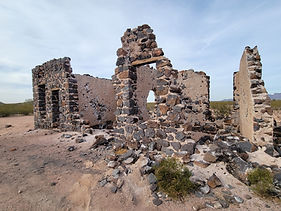
Ironwood Forest National Monument
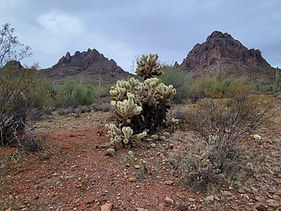
Picacho Peak State Park
Picacho Peak is impossible to miss from I-10 — a dramatic volcanic plug rising abruptly from the flat desert floor between Phoenix and Tucson, visible for miles in every direction. The peak has served as a landmark for every traveler through this corridor for thousands of years — prehistoric peoples, Spanish explorers, the Butterfield Overland Mail, Civil War soldiers, and now the 50,000 vehicles that pass it daily on the interstate. Most of them drive past. The ones who stop find more history and more desert beauty than the view from the highway suggests.
We camped here March 19–21, 2016 — two nights in the Sonoran Desert with the peak above us and the wildflower season in full swing.
The Geology — A Volcanic Landmark
Picacho Peak is a volcanic neck — the hardened core of an ancient volcano left standing after millions of years of erosion removed the softer surrounding rock. The peak rises from approximately 1,500 feet at the base to 3,374 feet at the summit — nearly 2,000 feet of vertical rise in a remarkably short horizontal distance. The rock is rhyolite and andesite, dark and angular, completely different in character from the sandstone canyon country of northern Arizona. It's the same geological process that created Camelback Mountain and Pinnacle Peak in the Phoenix area — just more isolated and more dramatic for it.

The Battle of Picacho Pass — April 15, 1862
Most people don't associate Arizona with the Civil War. They should. On the morning of April 15, 1862, the westernmost battle of the American Civil War erupted at the base of Picacho Peak among the saguaros and palo verdes — a collision between Union cavalry from California and Confederate pickets from Tucson that marked both the high-water mark of the Confederate advance into the West and its turning point.

The backstory begins when the Civil War divided the country in 1861.
Arizona was then part of the New Mexico Territory — a vast desert corridor that both sides recognized as strategically vital. The Confederacy wanted control of the Butterfield Overland Mail route and ultimately access to California's gold fields and Pacific ports. Confederate Captain Sherod Hunter's Arizona Rangers — approximately 100 men — rode from Texas and raised the Confederate flag over Tucson on February 28, 1862, declaring it the capital of the Confederate Arizona Territory.
The Union response came from California. Colonel James Henry Carleton marched 2,350 California Volunteers east from Fort Yuma in April 1862, determined to secure Arizona for the Union. On April 15, an advance patrol of 13 Union cavalrymen led by Lieutenant James Barrett encountered Confederate pickets camped near Picacho Peak. Barrett, ignoring orders to wait for the main column, attacked immediately. He failed to see seven additional Confederate soldiers concealed nearby. When they opened fire Barrett was killed along with two of his men. The fight lasted more than an hour before the Confederate Rangers retreated to Tucson. Three Union soldiers killed, three wounded. One Confederate killed, four wounded, three captured.
A Confederate tactical victory — but strategically the last Confederate action of consequence in Arizona. Carleton's full column moved on Tucson unopposed. By July 1862 all Confederate forces had retreated to Texas. The Confederate dream of a corridor to California was finished.


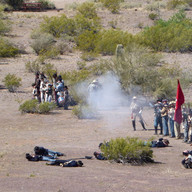


The Battle of Picacho Pass is now remembered by history as the war's westernmost battle — also the high-water mark of the Confederate westward advance. Each year the park hosts a Civil War reenactment of the battle — now one of the most popular living history events in Arizona, with far more participants than the original engagement involved. Battle monuments and interpretive markers throughout the park tell the full story. Wikipedia
The Wildflowers — An Arizona Spectacle
Picacho Peak State Park is one of Arizona's premier wildflower destinations. In favorable years — when winter rains are adequate and temperatures cooperate — the desert floor around the peak erupts in Mexican gold poppies, owl clover, lupine, desert marigold, and dozens of other species from late February through April. The bloom can be spectacular enough to stop traffic on I-10. March is the peak of the spring wildflower season — our March 2016 visit was well timed for this. The park posts bloom updates on its website and social media when conditions are right.
The Hiking
Two primary trails access the peak — both are challenging and both reward the effort with extraordinary views of the Sonoran Desert stretching to the horizon in every direction.
Hunter Trail — 2 miles round trip, 1,500-foot elevation gain, rated strenuous. The most direct route to the summit. Includes cables and handholds on the steepest sections. Not for those with a fear of heights. The cables are fixed anchors — not a via ferrata system but a genuine climbing assist on exposed rock. The summit views encompass the full desert corridor from Phoenix to Tucson on a clear day.
Sunset Vista Trail — 3.9 miles round trip, 750-foot elevation gain, rated moderate. A more gradual approach with excellent wildflower viewing in spring. Does not reach the summit but provides outstanding views of the peak and surrounding desert.
Both trails close at sunset — plan your timing accordingly.
The Campground
85 developed campsites for both tent and RV camping, all with electricity. Many sites have ramadas for shade. Two modern wheelchair-accessible restroom and shower buildings — free for campers. No water or sewer hookups. No generator use permitted. Potable water available at the dump station. Entrance gate closes 10 PM to 5 AM — plan arrivals accordingly.
The campground sits in an open Sonoran Desert setting with the peak visible from most sites — saguaro cacti, palo verde, and ocotillo surrounding the camp. Desert cottontails, Gambel's quail, roadrunners, and occasional coyotes are regular visitors. Spring mornings bring impressive birdlife during migration.
The Barrel Cactus

On our March 2016 visit we came across ripe Barrel Cactus fruit in the area — in March the fruit is holdover from the previous summer's bloom, still clinging to plants through the winter. A reminder that the timing of a desert visit determines what you find — see the Barrel Cactus entry in the AZ Places Plant & Foraging Guide for the full seasonal story.
Our Visit — March 19–21, 2016
Nine of us — my two kids, my daughter's boyfriend, and my friend's family — camped two nights at Picacho Peak for the Civil War Southwest reenactment event. It turned out to be one of the more memorable camping trips on the list.
The reenactment was the centerpiece of the visit — we attended the battle, browsed the vendor booths, and joined some of the hands-on demonstrations. Entertaining and genuinely educational in a way that a sign or a pamphlet never quite achieves. Watching uniformed soldiers maneuver through the desert scrub around the peak — in approximately the same terrain where the actual skirmish took place 154 years earlier — gives the history a different quality than reading about it.


During the event a rattlesnake appeared near where everyone was sitting. The kind of moment that resets the energy of a crowd quickly. A good reminder that the Sonoran Desert is fully occupied by its original residents regardless of what historical events are being reenacted nearby.
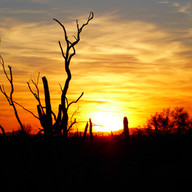
The sunset on our first evening was exceptional — the peak catching the last light above the desert floor as the sky changed behind it. The kind of thing you don't plan for and can't replicate.
At camp we practiced with the blowgun — a different kind of hands-on historical skills session happening simultaneously with the Civil War demonstrations in the next site over. A group from our party hiked up one of the smaller peaks — not the main summit — and came back in the dark. Both the hike and the timing were noted.
The next morning I hiked west across the desert floor alone — a slower, more observant kind of morning than the group activities of the day before. Along the way I found artifacts scattered in the scrub — bed springs, old buckets, glass bottles worn by the desert. The kind of material evidence of past human occupation that turns up when you leave the trail. Cactus flowers in bloom, saguaro standing tall, barrel cactus with fruit, dried-up mushrooms clinging to the desert floor after the winter rains. I walked until I hit a fence line, where a small group of cows had gathered and watched me with the mild indifference of cattle that have seen plenty of hikers reach the boundary before turning back.
(Video from the Civil War Southwest reenactment coming — check back.)
#Camping #PicachoPeak #PicachoPeakStatePark #CivilWar #BattleOfPicachoPass #MormonBattalion #ArizonaWildflowers #MexicanGoldPoppy #ArizonaCamping #AZStatePark #AZPlaces #PinalCounty #SonoranDesert #ArizonaHistory #CivilWarSouthwest #ArizonaHiking
Campground


Best Seasons & Temperatures
Spring is the premier season — late February through April brings the famous Mexican gold poppy and desert wildflower bloom that can be spectacular in good rainfall years. March is peak bloom timing. Fall is excellent for hiking with cooler temperatures and smaller crowds. Winter camping is mild and comfortable at 1,500 feet. Summer heat is extreme — camping and hiking are not recommended June through August. The Hunter Trail cables and steep terrain require dry conditions — do not attempt in wet weather. Check the park website for wildflower bloom updates before a spring visit.
Picacho Peak State Park - Picacho, Arizona
March 18-21, 2016