


Arizona's WildLife
"Where the Wild Things Roam"


Black Bear
Ursus americanus
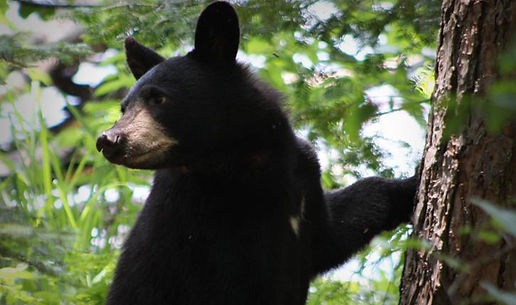

Look for tracks, scat with berries, or claw marks on trees; best viewed with binoculars
The black bear is Arizona’s largest carnivore and one of its most iconic mammals, inhabiting forested mountains, riparian areas, and high-elevation woodlands. These omnivores have a varied diet that includes berries, nuts, insects, small mammals, and vegetation, and they are often seen foraging along streams or in meadows. Generally solitary and mostly active during the early morning and evening, black bears are cautious around humans, so sightings are rare and should always be observed from a safe distance. Adult bears can weigh several hundred pounds, with thick black or dark brown coats that help them blend into their habitats. As a top omnivore, black bears play a crucial ecological role, shaping plant communities and supporting predator-prey dynamics, while providing wildlife watchers with memorable glimpses of Arizona’s wild landscapes.
Mammal

Identification & Behavior
Key Features: Colors vary: black, brown, cinnamon, blond; rounded ears; short tail
Size: 200–350 lbs (females), 250–600 lbs (males)
Behavior: Solitary except mothers with cubs; excellent climbers and swimmers
Diet: Omnivore – berries, acorns, insects, grasses, carrion, fish, small animals
Activity Pattern: Crepuscular
Habitat & Distribution
Found in forested mountains statewide, especially in northern and southeastern ranges such as the Mogollon Rim, White Mountains, Santa Catalina, and Chiricahua Mountains. Inhabits pine forests, oak woodlands, and riparian areas. Present in Coconino, Kaibab, Apache-Sitgreaves, and Coronado National Forests.
Elevation Range: 4500–10000 ft
Seasonal Presence: Year-round (less active in winter)
Risks & Management
Do not approach; store food properly; make noise and back away slowly if encountered
Fun Fact: Black bears can smell food over a mile away!

Abert's Squirrel
Coyote

Mule Deer

Wild Horse

Black Bear

Desert Bighorn Sheep

North American Porcupine

Cliff Chipmunk

Gray Fox

Ringtail

Coatimundi

Mexican Gray Wolf

Rock Squirrel

Coues White-tailed Deer

Mountain Lion

Rocky Mountain Elk