


Arizona's WildLife
"Where the Wild Things Roam"


Coyote
Canis latrans


Look in open areas during dawn/dusk; listen for calls at night
Location & Range
Coyotes are widespread across Arizona, New Mexico, and Utah. Their adaptability allows them to thrive in wild backcountry areas, rangelands, and even near campgrounds. They are present in nearly every national forest and BLM-managed area across the Southwest, making them one of the most likely animals visitors will encounter.
Natural Features
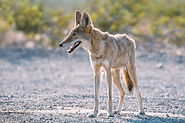
Coyotes are slender canines with pointed ears, narrow muzzles, and bushy tails often carried low. Their coats range from grayish-brown to reddish, providing camouflage in desert scrub, forest understory, and rocky grasslands. Their distinctive yips and howls often echo across valleys, especially at dawn and dusk.
Habitat & Distribution
Coyotes are found across nearly every public land area featured by AZ Places.
Arizona: Present in all national forests, including Apache-Sitgreaves, Coconino, Kaibab, Prescott, Tonto, and Coronado National Forests, as well as the Sonoran Desert, Mogollon Rim, and Black River areas. Frequently seen in BLM lands near ghost towns, historic sites, and open rangelands.
New Mexico: Common in the Gila National Forest, Carson National Forest, and BLM canyonlands of the northwest. Found from desert basins to the Sangre de Cristo Mountains.
Utah: Widespread across the Dixie, Fishlake, and Manti-La Sal National Forests, as well as Grand Staircase–Escalante National Monument and canyonlands near Capitol Reef. Coyotes are frequently seen in sagebrush flats, high-elevation forests, and desert canyons.
Coyotes are highly adaptable and may be spotted in areas where AZ Places guests camp, from ponderosa pine forests in Heber-Overgaard and Happy Jack, to riparian zones along the Black River, to the high desert ranges near Silver Reef Ghost Town in Utah.
Wildlife & Behavior
Coyotes are opportunistic omnivores, feeding on small mammals, reptiles, insects, carrion, fruits, and occasionally livestock or pets near developed areas. Intelligent and resourceful, they may hunt alone or in small groups. Breeding occurs in late winter, and litters of 4–7 pups are born each spring.
Cultural & Historical Significance
In Native American traditions across the Southwest, the Coyote is a prominent figure — often portrayed as a trickster, symbolizing cleverness, adaptability, and survival. Stories from tribes in Arizona, New Mexico, and Utah frequently feature Coyote as both a teacher and a mischievous figure.
Recreation & Viewing Tips
Coyotes are most active at dawn and dusk. Visitors may spot them trotting through washes, grasslands, or forest edges, or hear their howls at night. They should never be fed or approached, as this encourages dangerous habituation.
Conservation & Management
Coyotes are classified as “Least Concern” on the IUCN Red List. Their wide distribution and adaptability allow them to thrive in both wild and urban areas. State agencies in Arizona, New Mexico, and Utah monitor populations and provide guidance on living alongside coyotes.
Mammal

Identification & Behavior
Key Features: Slender build, pointed ears, bushy tail, vocal howls and yips
Size/Weight: 15–46 lbs; 3.3–4.3 ft long plus 14–16 in tail
Behavior: Intelligent, vocal, family-oriented, opportunistic hunter
Diet: Omnivorous – small mammals, reptiles, insects, carrion, fruits
Activity Pattern: Primarily nocturnal and crepuscular; occasional daytime sightings
Habitat & Distribution
Arizona Range: Entire state, including Apache-Sitgreaves, Coconino, Kaibab, Prescott, Tonto NFs; Mogollon Rim; Black River; Sonoran Desert
New Mexico Range: Gila NF, Carson NF, Sangre de Cristo Mountains, Chihuahuan Desert
Utah Range: Dixie, Fishlake, and Manti-La Sal NFs; Grand Staircase–Escalante; Capitol Reef region
Elevation Range: Sea level to 11,000 ft (3,350 m)
Best Seasons: Year-round; most visible at dawn and dusk
Risks & Management
Coyotes may pose risks to unattended pets, small livestock, and occasionally to humans when they become habituated to food.
Fun Fact: Coyotes can run up to 40 mph and sometimes hunt in pairs or small groups to bring down deer.

Abert's Squirrel
Coyote

North American Porcupine

Black Bear

Gray Fox

Ringtail

Cliff Chipmunk

Mexican Gray Wolf

Rock Squirrel

Coatimundi

Mountain Lion

Rocky Mountain Elk

Coues White-tailed Deer

Mule Deer

Wild Horse