


Arizona's WildLife
"Where the Wild Things Roam"


North American Porcupine
Erethizon dorsatum


Look for gnawed branches in trees.
The North American porcupine is a large, slow-moving rodent covered in sharp, protective quills that deter predators. Primarily nocturnal, porcupines spend much of their time foraging for leaves, twigs, bark, and other plant material, often climbing trees with surprising agility despite their size. They are found in a variety of habitats in Arizona, including conifer forests, mixed woodlands, and rocky slopes, where they take advantage of trees for both food and shelter. Although solitary and generally non-aggressive, porcupines are well-equipped to defend themselves with their quills, which can embed in the skin of predators or curious animals. Their presence plays an important ecological role by influencing forest vegetation and providing opportunities for predators and scavengers to interact with their environment.
Mammal

Identification & Behavior
Key Features: Thick coat, sharp quills
Size: 12–35 lbs
Behavior: Climbs trees to feed on bark.
Diet: Herbivore — bark, leaves, fruit
Activity Pattern: Nocturnal
Habitat & Distribution
Found statewide, inhabiting forests, woodland edges, and semi-arid areas near Mogollon Rim, White Mountains, Kaibab Plateau, and San Francisco Peaks. Present in Coconino, Apache-Sitgreaves, Kaibab, and Prescott National Forests.
Elevation Range: 3,000–8,000 ft
Seasonal Presence: Year-round
Risks & Management
Do not touch; quills detach easily.
Fun Fact: Cannot throw quills, only release on contact.

Abert's Squirrel
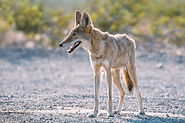
Coyote

Mule Deer

Wild Horse

Black Bear

Desert Bighorn Sheep

North American Porcupine

Cliff Chipmunk

Gray Fox

Ringtail

Coatimundi

Mexican Gray Wolf

Rock Squirrel

Coues White-tailed Deer

Mountain Lion

Rocky Mountain Elk