


Arizona's WildLife
"Where the Wild Things Roam"


Regal Horned Lizard
Phrynosoma solare
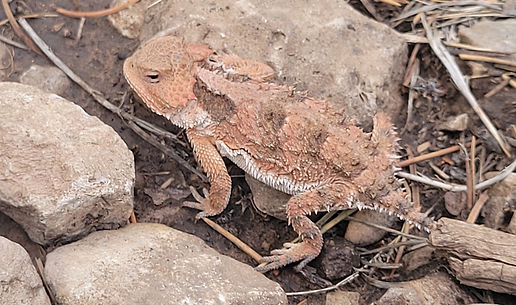

Regal Horned Lizards are most active during warm daylight hours, especially in the morning.
Look along dirt roads, sandy washes, and open desert flats
Move slowly—they rely on staying still and are easy to overlook
Best spotted in spring through early fall
Check sunny areas near campsites and low vegetation
Patience is key—they often blend in perfectly with the ground.
Location & Range
The Regal Horned Lizard is found primarily in southern and central Arizona, extending into parts of southeastern California and northern Mexico. In Arizona, it is most common throughout the Sonoran Desert, including areas around Phoenix, Tucson, and surrounding desert regions.
It is frequently encountered in open desert landscapes, along dirt roads, and near dispersed camping areas where AZ Places guests explore.
Natural Features
The Regal Horned Lizard has a broad, flattened body covered in sharp spines and a crown of prominent horns on its head. Its coloration ranges from tan to reddish-brown, allowing it to blend seamlessly into desert soils, gravel, and rocky terrain.
Unlike most lizards, it has a squat, almost toad-like appearance, which helps it avoid detection. Its most remarkable feature is its ability to shoot a stream of blood from the corners of its eyes as a defense against predators.
Habitat & Distribution
Regal Horned Lizards are closely tied to desert ecosystems and are commonly found in areas with loose, sandy soils.
Arizona:
Widespread throughout the Sonoran Desert, including the Phoenix metro outskirts, southern Arizona, and low desert regions. Found in areas such as the Tonto National Forest (lower elevations), Coronado National Forest foothills, and desert regions surrounding the Mogollon Rim transition zones. Frequently seen near open desert campsites, washes, and dirt roads.
They are commonly encountered in AZ Places-style locations, including desert flats near dispersed camping areas, open rangelands, and quiet backcountry routes where human activity is minimal.
Wildlife & Behavior
Regal Horned Lizards are specialized insectivores, feeding primarily on harvester ants. They may consume hundreds of ants in a single day.
They rely heavily on camouflage and will remain completely motionless when approached. If threatened, they may:
Puff up their bodies to appear larger
Bury themselves slightly in loose soil
Squirt blood from their eyes to deter predators
They are solitary and spend much of their time basking in the sun to regulate body temperature.
Cultural & Historical Significance
Often referred to as the “horny toad,” the Regal Horned Lizard holds a place in Southwestern folklore and childhood memory across Arizona. It has been featured in stories, desert lore, and even kept historically as a curiosity due to its unusual appearance and behavior.
Its unique defense mechanism and prehistoric look have made it one of the most recognizable reptiles of the American Southwest.
Recreation & Viewing Tips
Regal Horned Lizards are most active during warm daylight hours, especially in the morning.
Look along dirt roads, sandy washes, and open desert flats
Move slowly—they rely on staying still and are easy to overlook
Best spotted in spring through early fall
Check sunny areas near campsites and low vegetation
Patience is key—they often blend in perfectly with the ground.
Conservation & Management
The Regal Horned Lizard is not currently listed as endangered but faces pressures from habitat loss, urban development, and declines in native ant populations due to invasive species and pesticide use.
Arizona wildlife agencies encourage habitat preservation and minimizing disturbance to ensure stable populations.
Reptile

Identification & Behavior
Key Features: Flattened body, spiny scales, crown of horns, camouflage coloring
Size: 3–5 inches long
Behavior: Camouflages, remains still, puffs body, may squirt blood as defense
Diet: Specialized insectivore – primarily harvester ants
Activity Pattern: Diurnal
Habitat & Distribution
Sonoran Desert, central and southern Arizona
Elevation Range: 1,000–5,500 ft
Seasonal Presence: Spring through Fall
Risks & Management
Minimal risk to humans; completely harmless.
Fun Fact: Regal Horned Lizards can shoot blood from their eyes up to several feet as a defense mechanism against predators like coyotes.

Arizona Black Rattlesnake

Mexican Gartersnake

Arizona Mountain Kingsnake

Regal Horned Lizard

Arizona Ridge-Nosed Rattlesnake

Sonora Mud Turtle

Arizona Striped Whiptail

Sonoran Gopher Snake

Gila Monster