


Arizona's WildLife
"Where the Wild Things Roam"


Wild Turkey
Meleagris gallopavo
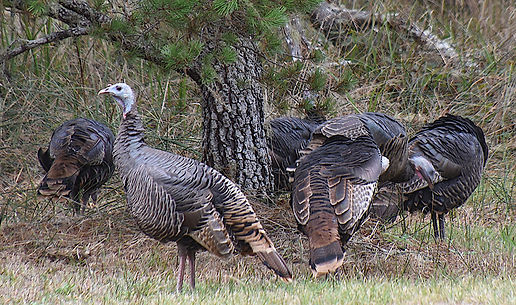

Look in meadows early morning
The wild turkey is a large, ground-dwelling bird found throughout Arizona’s forests and woodlands, easily recognized by its iridescent feathers, fan-shaped tail, and prominent wattled head. Historically extirpated from parts of Arizona, wild turkeys have been successfully reintroduced and now thrive in ponderosa pine forests, oak woodlands, and riparian areas. They forage for seeds, nuts, berries, and insects, often moving in flocks, while males display elaborate courtship behaviors during the breeding season, including strutting and tail-fanning. Wild turkeys play an important ecological role by dispersing seeds and serving as prey for large predators, while providing memorable wildlife viewing opportunities for hikers, birdwatchers, and nature enthusiasts.
Bird

Identification & Behavior
Key Features: Fan-shaped tail, iridescent body, bald head
Size: 3–4 ft tall, 10–24 lbs
Behavior: Live in flocks, males display in spring
Diet: Omnivore — acorns, seeds, insects
Activity Pattern: Diurnal
Habitat & Distribution
Found statewide in forests, grasslands, and riparian corridors, often in oak and pine habitats of the Mogollon Rim, White Mountains, and Kaibab Plateau. Present in Coconino, Apache-Sitgreaves, Kaibab, Prescott, and Tonto National Forests.
Elevation Range: 4,500–9,000 ft
Seasonal Presence: Year-round
Risks & Management
Keep distance during mating season
Fun Fact: Ben Franklin wanted the turkey as U.S. symbol.

American Black Vulture

Greater Roadrunner

Bald Eagle

Painted Redstart

Cactus Wren

Red-tailed Hawk

Golden Eagle

Wild Turkey

Great Horned Owl

Woodhouse's Scrub Jay