

Indian Paintbrush
✓ Edible
✓ Medicinal

Castilleja spp. (primary Arizona species: Castilleja chromosa — Desert Paintbrush; Castilleja integra — Wholeleaf Paintbrush; Castilleja linariifolia — Wyoming Paintbrush)
Plant Family: Orobanchaceae (Broomrape Family) (formerly Scrophulariaceae)
Other Names
Paintbrush, Prairie Fire, Grandmother's Hair — Spanish: Castilleja, Cola de Zorra — Navajo: Tó Dích'íʼii — Zuni: Achiya
✓ None
⚠ High
⚠ Moderate
⚠ Low
Flowers (nectar, raw — small quantities only)
Edible Parts


How to Identify
Indian Paintbrush is one of the most immediately recognizable wildflowers in Arizona — the brilliant red to orange flower bracts appearing to drip with paint giving the plant its common name and making it unmistakable in the field. Once seen it is never forgotten.
Size and Form: A perennial herb typically 8 to 24 inches tall — growing in clumps of multiple stems from a shared root system. The plant has a somewhat weedy, upright form with the colorful bracts concentrated at the top of each stem.
Stems: Upright, unbranched or lightly branched, covered in fine hairs. Multiple stems growing from a shared woody base.
Leaves: Alternate, narrow, lance-shaped to linear — 1 to 2 inches long. Often slightly hairy. The leaves are not the identification feature — they are easily overlooked against the brilliant bracts above.
The "Flowers" — actually bracts: The brilliant red to orange color of Indian Paintbrush comes primarily from modified leaves called bracts rather than the petals of the true flower. The actual flowers are small, tubular, and greenish — tucked among the colorful bracts and largely hidden. The bracts are what catch the eye and give the plant its painted appearance. Color ranges from brilliant scarlet red to orange-red to yellow-orange depending on species, location, and individual plant. Some Arizona populations show pink or salmon tones.
Roots: The roots of Indian Paintbrush attach to the roots of neighboring plants — extracting water and nutrients in a hemiparasitic relationship. This root behavior is not visible above ground but has significant implications for foraging safety — see Cautions section.
Habitat: Remarkably variable — desert slopes, canyon rims, mountain meadows, open forest understory, and rocky openings across a wide elevation range. Found in association with virtually every plant community in Arizona from Sonoran Desert scrub to alpine meadows. Classic Arizona Indian Paintbrush habitat includes the canyon rim environments of the Mogollon Rim and the rocky slopes of the sky island ranges.
Arizona species:
Castilleja chromosa (Desert Paintbrush) — lower elevation desert and chaparral, brilliant orange-red
Castilleja integra (Wholeleaf Paintbrush) — mid elevation grasslands and open woodland, red to orange
Castilleja linariifolia (Wyoming Paintbrush) — higher elevation mountain meadows and open forest, bright red — the state flower of Wyoming
Look-alike note: Owl's Clover (Castilleja exserta — formerly Orthocarpus purpurascens) — a related hemiparasitic annual with pink to purple flower bracts. Seen at Davis Wash on the Apache Trail. Similar caution profile to Indian Paintbrush. Flowers are edible in small quantities but the same selenium accumulation concern applies. Owl's Clover is documented as a spring wildflower in the lower Sonoran Desert wash habitats — the purple-pink color distinguishes it from the red-orange Indian Paintbrush.
Where and When to Gather
Grassland
Desert
Forest
Habitat: Desert slopes, canyon rims, grasslands, open forest, and rocky openings across a remarkable elevation range — essentially wherever there are suitable host plants for the parasitic root system.
Elevation: 2,000 to 10,000 feet in Arizona — found in virtually every plant community in the state.
Range in Arizona: Statewide — all counties at appropriate elevations. Confirmed locations across your AZ Places bucket list:
Jacks Canyon, FR 230B — Coconino National Forest, September 2026
Walnut Canyon National Monument — May 2022
Mogollon Rim corridor — multiple visits
Edge of the World, FR 231 — June 2026
Also found: Throughout western North America from Alaska to Mexico — one of the most widespread wildflower genera in North America with over 200 species.
When to Gather:
Flowers and bracts: Spring through summer — March through August depending on elevation. Lower desert species bloom earlier, high elevation species bloom later. Harvest flowers at peak color when bracts are most vivid.
Elevation Range: 2,000 to 10,000 feet
Seasons
Spring
Dry Summer
✓ Seen / Harvested
Seen across multiple AZ Places bucket list locations — one of the most consistently encountered wildflowers across Arizona's canyon and mountain environments:
Jacks Canyon, FR 230B, Coconino National Forest — September 2026
Walnut Canyon National Monument — May 17, 2022
Mogollon Rim corridor — multiple visits
Edge of the World, FR 231 — June 2026
Chricachua Mountains May 2026
Owl's Clover (Castilleja exserta): Seen at Davis Wash, Apache Trail — March 6–8, 2026. Purple-pink bracts in the lower desert wash habitat — a spring annual of the Sonoran Desert wash community. Same caution profile as Indian Paintbrush. Photos available.
Not yet harvested — flowers documented for future cautious field tasting.
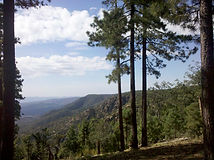
Edge of the World (FR 231)

Jacks Canyon (FR 230)

Mogollon Rim — FR 608 (Pine, AZ)
How to Gather
Flowers — cautious small quantity harvest only:
Select individual flower clusters at peak color
Pull or pinch individual bracts and flowers gently from the stem
Do not strip an entire plant — harvest a few flowers for tasting only
Eat immediately — do not harvest in quantity
⚠️ The selenium caution applies — see Cautions section. Taste a small amount and do not consume large quantities.
Ethical harvest:
Indian Paintbrush flowers are a critical nectar source for hummingbirds — the tubular flower structure is specifically designed for hummingbird pollination. Leave the majority of flowers on each plant for hummingbirds and other pollinators.
The hemiparasitic nature of the plant makes transplanting essentially impossible — it cannot survive without its host plant. Never attempt to transplant or move the plant.
Never harvest from protected lands without a permit — Indian Paintbrush is present in multiple National Monuments and State Parks in your bucket list where harvesting is prohibited.
HOW TO USE
Edible Uses
Indian Paintbrush flowers are edible in small quantities — the primary documented traditional use is eating the flowers fresh as a trail snack for their nectar content. The Zuni, Navajo, Hopi, and other Southwestern peoples documented eating the flowers — sucking the nectar from the base of the tubular flowers or eating the entire flower in small quantities.
The flavor is mild and slightly sweet — the nectar is the primary draw rather than any significant flavor from the bract or flower tissue itself. The experience is similar to pulling nectar from honeysuckle flowers — a sweet momentary trail food rather than a significant caloric source.
The flowers are not a primary food source — they are a trail snack, a botanical curiosity, and a connection to the Native traditions that used them. The selenium caution means they should not be consumed in quantity regardless of how good they taste.
Medicinal Uses
Indian Paintbrush has documented medicinal uses across multiple Native traditions — primarily the flowers used topically and the plant used as a general tonic in small quantities.
Hair growth: Navajo — plant used as a hair growth treatment. The specific preparation is not extensively documented but the use is consistently recorded across multiple ethnobotanical sources.
Love medicine: Navajo — plant used in courtship and love medicine traditions. The specific application connects to the plant's striking visual appearance and its association with beauty in the Navajo cultural tradition.
Venereal disease treatment: Various preparations documented for treating venereal disease — the antimicrobial properties of the plant's secondary compounds relevant to this application.
Rheumatism: Root preparations used topically for rheumatism in some traditions — the roots should not be consumed internally due to higher compound concentrations.
General tonic: Small quantity flower tea used as a general health tonic in some traditions — the same selenium caution applies to any internal preparation.
Native American Uses
Indian Paintbrush was recognized and used across virtually every Native people within its wide North American range — the striking visual appearance making it one of the most culturally significant wildflowers in Native traditions.
Navajo: Hair growth treatment. Love medicine. General medicinal use. The plant features in Navajo ceremonial contexts connected to beauty and attraction.
Zuni: Flowers eaten fresh as a food — one of the more specifically documented food uses across Southwestern peoples.
Hopi: Flowers used as food and the plant recognized medicinally.
Blackfoot: Plant used medicinally. The bright red color associated with warrior traditions.
Multiple Plains and Basin peoples: Flowers eaten as a trail snack — the sweet nectar universally recognized as an edible feature of the plant.
Wildlife significance: Indian Paintbrush is one of the most important hummingbird nectar plants in North America — the tubular flower structure, brilliant red color, and abundant nectar are specifically adapted for hummingbird pollination. Broad-tailed, Rufous, and Black-chinned Hummingbirds all work Indian Paintbrush heavily wherever the plant occurs. The ecological value of the plant as a hummingbird food source is as significant as any human use.
How to Prepare | Recipes
Nectar access — field use only:
Select a fully colored flower bract at peak bloom
Pull a single tubular flower from among the bracts
Press the base of the flower tube to the lips and draw the nectar
Mild, sweet nectar — similar to honeysuckle
Eat the entire small flower if desired — mild flavor
Limit consumption to a few flowers per visit — do not harvest in quantity
No other preparations recommended — the selenium accumulation caution means Indian Paintbrush should not be used in cooked preparations, teas, or any preparation involving larger quantities.
Cautions
⚠️ Selenium accumulation — the primary caution: Indian Paintbrush is a hemiparasitic plant that draws water and nutrients from the roots of neighboring plants. In selenium-rich soils — which occur across parts of Arizona and the Southwest — the plant can accumulate toxic levels of selenium from host plants. Consuming large quantities of Indian Paintbrush from selenium-rich areas can cause selenium toxicity. Limit consumption to a few flowers as a trail snack — do not harvest in quantity or use in cooked preparations.
Hemiparasitic nature: The plant's compounds reflect not just its own chemistry but the chemistry of its host plants — which varies by location and host species. This variability makes consistent safety assessment difficult.
Roots — do not consume: The roots concentrate compounds more than the above-ground portions. Never consume Indian Paintbrush roots.
Not all populations are equally safe: Selenium soil content varies across Arizona — plants in selenium-rich volcanic soils may be more problematic than plants in selenium-poor soils. When in doubt limit consumption to a few flowers and do not repeat frequently.
Owl's Clover (Castilleja exserta): The same caution profile applies to Owl's Clover — same family, same hemiparasitic nature, same selenium accumulation potential. Seen at Davis Wash, Apache Trail, March 2026. Purple-pink bracts distinguish it from Indian Paintbrush. Flowers edible in small quantities with the same cautions.
Protected lands: Indian Paintbrush is present in multiple protected areas in your bucket list — Walnut Canyon National Monument, Edge of the World (Coconino NF), and others. Harvesting is prohibited in National Monuments and many protected areas — observe only in these locations.
⚠️ DISCLAIMER This information is provided for educational purposes only. Always positively identify any plant before consuming or using medicinally. When in doubt, do not harvest. Consult a qualified healthcare provider before using any plant for medicinal purposes. Some plants have toxic look-alikes — never rely on a single source for identification. AZ Places and Rachel Joel assume no responsibility for misidentification or misuse.


